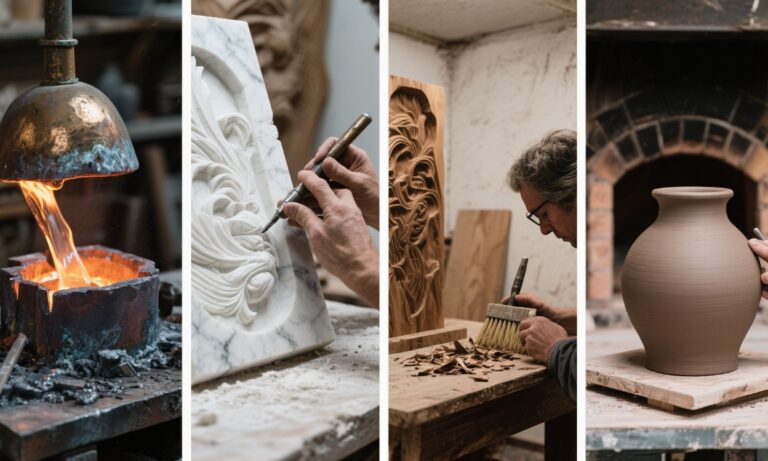
How long does a sculpture actually last? The answer depends on what material it is made of, where it is placed, and whether it is well maintained. For example, bronze, marble and such “hard core” materials, can withstand the wind and rain, can live for hundreds or even thousands of years; but if it is resin, wood, fiberglass and such materials, meet the high temperature, humidity, sun, it is likely that decades or even a few years on the aging, cracking.
Specific sculpture of different materials:
- Bronze sculpture, stone sculpture is the most durable, life expectancy to “century” “thousand years”.
- Resin sculpture class indoor preservation of about 5-20 years, outdoor environment will be shortened to 3-8 years.
- Wooden sculpture, fiberglass sculpture is in the middle, very susceptible to climate.
If placed indoors, stable temperature and humidity, no direct sunlight, almost all sculpture life can be greatly extended; but placed outdoors, it must be based on the material to take different protective measures, such as bronze should be waxed to prevent corrosion, resin should be sprayed with ultraviolet coating, but also need to be regularly cleaned and inspected.
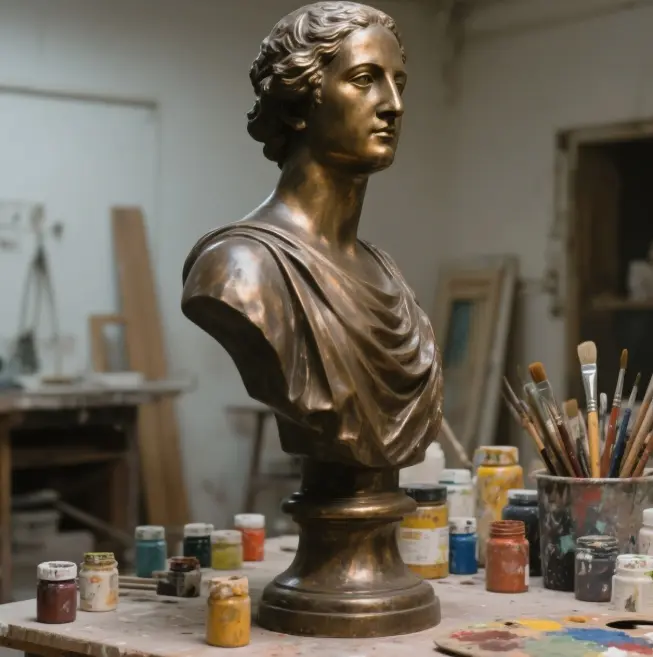
Comparison of the life span of sculptures made of different materials in real life
Bronze sculpture
- Outdoor life: hundreds to thousands of years.
- Indoor preservation: theoretically permanent.
Bronze (an alloy of copper and tin) will slowly oxidize in the air, forming a layer of “patina”, which protects the interior from further corrosion. However, if there is chlorine in the environment (e.g. salt spray from the sea, industrial exhaust fumes), it may induce “bronze disease”, resulting in green powder and small holes on the surface, which need to be treated regularly.
Classic example:
- The Houmuwu Ding from the Shang Dynasty in China, which is still intact after more than 3,300 years;
- Donatello’s Bronze David from the Renaissance, which has been in good condition for almost 600 years now.
Resin sculpture
- Indoor life: 5-20 years, high quality materials up to 20 years;
- Outdoor life: 3-8 years, UV and climate will accelerate aging.
Although resin has a delicate appearance and is easy to mold, it will yellow when exposed to sunlight and will crack when the temperature changes greatly. Temperature difference of more than 20 ℃, such as warm in winter and hot in summer environment, the interior is very easy to get problems.
Some collection enthusiasts recommend that when placed indoors and protected from light as much as possible, and regularly sprayed with UV coating (such as 3M UV Clear), the life of the product can be extended to more than 10 years. However, when placed on a balcony or windowsill in the sun, they will become discolored and brittle in about three years.
Sculptures in other common materials
Stone sculpture:
- Granite: very durable, outdoor life 2000-5000 years, such as the Pyramids Sphinx.
- Marble: susceptible to acid rain, outdoor life 200-500 years.
Wood Sculpture:
- Hardwood (e.g. rosewood, teak): indoor preservation for hundreds of years is not a problem.
- Softwood or pine: will rot in a moist environment in a few decades.
Fiberglass (FRP):
- With protective coating: 10-30 years;
- Unprotected: will begin to delaminate and yellow after about five years in the wind and sun.
What factors affect the life of a sculpture anymore?
Sculpture material itself is different
- Bronze is more durable because of its high purity and thickness, while some “cold cast bronze” on the market is actually copper powder with resin, which is cheaper but much less durable.
- There is also a huge difference between good and bad resins. Good resins contain UV and antioxidant additives, while bad resins may even swell and crack due to water absorption.
Sculpture use different environmental conditions
- Indoor environment: stable temperature (15-25℃), moderate humidity (40%-60%), no direct sunlight, more friendly to all materials.
- Outdoor environment: UV rays, acid rain, humidity, salt spray, pollutants …… are damaging to different materials to varying degrees.
- Bronze in coastal areas is more prone to “copper disease”;
- Marble statues are easily eroded by acid rain;
- Resin breaks its molecular chain under sunlight, turning yellow and brittle.
Whether the sculpture needs regular maintenance
- Bronze sculptures need regular cleaning and waxing, and it is better to treat them once every half a year in coastal or heavily polluted areas;
- Resin sculptures need to be protected from direct sunlight and sprayed with anti-UV coatings;
- The surface of stone sculptures can be brushed with a layer of osmotic protectant, and it is best to replenish the surface once every 5 years.
See Problems and Restoration Approaches
Bronze sculpture:
- Bronze Sculpture Problem Treatment: when bronze has green powder and small holes, it needs to be cleaned with deionized water and alcohol, then sealed with professional inhibitors (such as BTA), and finally waxed to protect it.
Resin sculpture:
- Resin sculpture yellowing: yellowing is irreversible, you can try white spray paint to cover.
- Resin sculpture cracking: can be filled with epoxy resin, smoothed and repainted.
- Resin sculpture brittle: professional personnel recommend to put into a display cabinet or cover to reduce movement and environmental stimulation.
Other materials of the sculpture:
- Marble sculpture weathering: usually available waterproof coating to delay;
- wood sculpture insect damage: we can inject insect repellent, environment with dehumidifier or silica gel desiccant.
- Glass outline sculpture: sculpture scrape off the loose surface, repair with glass cloth and new resin, then repaint.
When we use the sculpture, usually how to into how to maintain?
Bronze sculpture maintenance
- Indoor: wipe and wax every two years;
- Outdoor: twice a year is recommended, especially once in each of the spring and fall seasons.
- Coastal areas: add inhibitors to the frequency of use to every 6 months.
Resin sculpture maintenance
- Cleaning: wipe gently with a damp cloth, avoid alcohol and solvents.
- Protection: Spray UV protective varnish every six months, keep away from direct sunlight.
Maintenance of stone and wood sculptures
- Stone sculpture: don’t use acidic cleaner, do moisture-proof treatment on the bottom.
- Wooden sculpture: keep humidity 50%-60%, beeswax once a year.
Large sculpture professional recommendations for maintenance
- For sculptures of high value (over 100,000 RMB), it is recommended to have them inspected by a professional restorer every 3-5 years.
- X-rays can be used to examine the metal structure or a microscope can be used to look at the aging of the resin.
Frequently Asked Questions about the use of sculpture
Is it true that bronze sculptures can last for thousands of years?
Yes, many bronze statues in the Forbidden City or European churches have lasted for hundreds or even thousands of years, the key lies in: pure material + regular maintenance.
Why do resin sculptures break down in a few years?
Resin is afraid of the sun, afraid of heat. Prolonged exposure to the sun makes the molecular structure fracture, it will change color, become brittle. If you put it in the air-conditioning place, it will be easier to crack.
Can I maintain my sculpture by myself?
Yes, you can do daily cleaning, waxing and UV coating. However, you should pay attention to the right material, do not use stain remover powder or steel wire ball indiscriminately.
How often do outdoor sculptures need to be cleaned?
It is recommended to clean it once a quarter in normal environment, if it is in coastal or polluted area, it is better to wipe it once a month. Timely rinsing after rain can prevent acid rain residue.
Is stone sculpture the most durable?
Granite yes, marble is worse. Overall the life expectancy ranking is: Granite > Bronze > Marble > Fiberglass > Resin.
Sculpture life is not out of nowhere, it depends on the material itself, but also depends on how you use, how to raise. You choose the right material, with the right way, with a little regular maintenance, sculpture can “live” a long time.
Whether it’s a piece of public art, a museum collection, or a small piece in your living room, if you protect it well, it can stay with you and even be passed on to the next generation.
As the Renaissance sculptor Cellini said, “The eternity of art lies not only in the strength of the material, but also in the guardianship of those who come after it.”