What is relief sculpture? It is an essential branch of the art of sculpture, characterized by its reliance on a flat background, such as walls or slate. Through carving, the form is made ‘raised’ or ‘concave,’ forming a ‘shallow three-dimensional” effect. Compared with round carving, relief carving emphasizes more on the “association with the background” – it will not be detached from the plane. Still, it can make the picture “stand up” through the light and shadow, layers.
SPut relief is “sculpture on the wall”, which transforms flat space into a visual experience with depth, suitable for expressing narrative themes such as war, mythology, and historical events. It is also commonly used in architectural decoration.

The origin and history of relief sculpture
The history of relief sculpture is almost in sync with human civilization. From ancient temples to modern buildings, it has always been an essential carrier for “recording history and transmitting culture”.
Ancient civilization: reliefs are “history books before words”
- Ancient Egypt: The wall reliefs of Egyptian temples are a good example of ancient Egyptian art. They employed the technique of “concave carving” to depict the pharaoh’s campaigns and sacrificial scenes, characterized by simple lines and exaggerated details, which conveyed a sense of complete religious mystery.
- Two River Basin [or Mesopotamia]: The Assyrian Empire’s Chariot Reliefs use high relief techniques to represent the king’s lion hunting scenes. Animal muscles and chariot wheels are meticulously carved, conveying a complete sense of dynamism.
- Ancient Greece: the Parthenon “Panathenaic relief” is the pinnacle of ancient Greek Relief. It depicts the Athenian celebration of the Panathenaic festival scene; the characters are beautifully modeled, proportional, and harmonious, reflecting the ancient Greek “humanism” spirit.
- Ancient India and Cambodia: The Buddhist reliefs of India’s Ajanta Caves [assuming “Achandra Grotto” refers to Ajanta] and the sandstone reliefs of Cambodia’s Angkor Wat depict the story of the Buddha’s birth in Relief, featuring smooth lines and a complex image that conveys the solemn character of Eastern religion.
Medieval and Renaissance: the “marriage” of religion and art
- Medieval Gothic Churches: The frieze reliefs of Notre Dame in Paris, France, and the wall reliefs of Cologne Cathedral in Germany all employ high-relief techniques to represent biblical stories, featuring exaggerated figures and serious expressions, in keeping with the “sacred” theme of medieval religion.
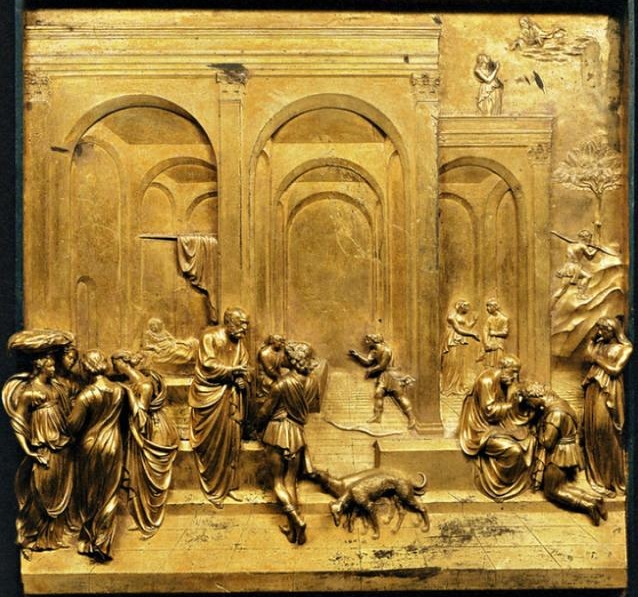
- Renaissance: The ‘Gates of Paradise’ [not ‘Heaven’] in the Baptistery of Florence, Italy, is a masterpiece of Renaissance bas-relief. It uses ‘shallow relief + perspective’ techniques, portraying 10 stories from the ‘Old Testament.’ The artwork is rich in layers, and the characters are lifelike, leading Michelangelo to call it ‘The Gates of Paradise.
Modern and contemporary: from “monumental” to “experimental”
19th-century America: The ‘Brumidi Corridors’ or ‘Fresco of the Apotheosis of Washington’ (if referring to the dome) in the U.S. Capitol Building depict essential figures in U.S. history, such as Washington and Jefferson, in Relief, emphasizing ‘national identity’ and ‘historical remembrance.’’
Contemporary Art: With the development of digital technology, relief art has entered an “experimental” phase. Artists use 3D printing, laser cutting, and other technologies to create abstract reliefs, which have transitioned from “museums” into “everyday life.”
An approximate way to categorize relief sculptures
According to the degree, Relief and express Relief can be divided into four categories.
HRelieflief
HRelief is the highest degree, where the raised part of the background plate is more than 1/2, or even close to the three-dimensional effect of the round sculpture. It creates the visual impact of a figure about to walk out of the wall through strong contrasts of light and shadow (e.g., shadows from sunlight).
Example: Ancient Greek “God of War Ares Relief”.

Relieflief
Relief is the lowest degree, where the raised part is usually not more than 1/4 of the way from the background plate, making the overall form appear closer to the background. It expresses “three-dimensional in plane” through delicate lines, subtle light and shadow, and is suitable for describing complex narrative scenes.
Example: “Panathenaic Relief” of the Parthenon in ancient Greece.

Concave Carving
SunRelief is the opposite of High Relief, where the design is recessed into the background surface, with only the lines or outlines raised. It was often used in documentaries about ancient civilizations because concave carving is more resistant to wear and tear, making it suitable for long-term preservation.
Example: “Pharaonic Sacrificial Relief” from the Temple of Karnak in Ancient Egypt.

Relief with Perspective: “Combination of Painting and Sculpture”
During the Renaissance, artists incorporated the perspective techniques of painting into relief sculpture, creating “relief with perspective”. This type of Relief uses Relief for the foreground and Relief for the background, incorporating the vanishing point from painting (to give the picture a greater sense of depth) and narrative elements.
Example: “Gates of Heaven” by Ghiberti, Italy.
Materials and Techniques of Relief Sculpture
The choice of materials for relief sculpture depends on the intended use (monumental or decorative), the environment (indoor or outdoor), and the technique of the era (traditional or modern). Common materials include:
Traditional materials: stone, bronze, wood
- Stone (marble, sandstone, granite): the most commonly used material for reliefs, suitable for outdoor buildings (e.g., temples, monuments) because stone is resistant to weathering and has a long lifespan. Examples: Parthenon relief (marble), Angkor Wat relief (sandstone).
- Bronze: cast by the “lost wax method”, suitable for interior decoration because of its fine texture and ease of preservation.
- Wood is suitable for small relief sculptures for interiors because it is lightweight and easy to carve, as seen in examples such as Medieval Gothic churches featuring wood reliefs (e.g., altarpieces).
Modern materials: plaster, terracotta, digital media
- Gypsum: commonly used for ‘relief model’ because it is easy to mold and low-cost.
- Terracotta: ‘fi’ed’ to create relief sculptures, suitable for interior wall decoration.
- Digital media: 3D printing, laser cutting, and other technologies make relief sculpture creation more “efficient” and “precise”. For example, artists can use computers to design relief patterns and then print out the finished product using 3D printers. Laser cutting can carve out complex lines on metal, acrylic, and other materials.
Artistic and Functional Value of Relief Sculpture
The reason why relief sculpture can span thousands of years and become an “evergreen tree” in the history of art lies in its unique artistic language and practical function:
Visual Art Language
Relief sculpture combines “flatness” and “three-dimensionality” to create a “visual experience with depth” through light and shadow, hierarchy, and proportion. Yet it can be more “textured” than a mural – for example, when sunlight shines on a relief sculpture, the shadows of the raised parts make the image “come alive”, as if the characters are moving and the story unfolding.
Architecture and Public Art Decoration
Relief is the “skin” of the building, which can be perfectly integrated with the structure of the building (e.g., walls, friezes, columns) without destroying the overall beauty of the building. Still, it can enhance the “artistic temperament” of the building. For example, the reliefs of ancient Greek temples combine with the corbels and walls to form a “harmonious visual whole”;
Education and Cultural Dissemination
In ancient times, when writing was not yet widespread, relief sculpture was “an important tool for recording history”. For example, the reliefs in ancient Egypt recorded the pharaoh’s campaigns and sacrifices; the reliefs in Assyria documented the king’s lion hunts. These reliefs are like “visual history books” that allow us to travel through the millennia and see the lives of ancient people.
Classic Relief Works and Artists

Relief of the Parthenon (Ancient Greece)

Relief of a Chariot (Assyria)

Ghiberti, The Gates of Paradise (Renaissance Florence)

Rodin, The Gates of Hell

U.S. Capitol Wall of Figures in Relief
The difference between relief sculpture and other arts
Many people rely on sculpture in the round and fresco. They have essential differences in their three-dimensional nature and their relationship with the background.
Relief is a kind of art between two-dimensional and three-dimensional”. It is attached to the background, with obvious undulation and three-dimensionality, yet not wholly detached from it. Ouu can see the undulation of the form from the front, with a rich variety of shadows, as seen in the reliefs of the warriors on the Parthenon, or the Renaissance ates of Paradise.
A round sculpture, on the other hand, is a distinct three-dimensional form that can be viewed from all sides. It has full volume from any angle and is a common type of statue we see, such as Michelangelo’s David and Rodin’s The Thinker. It is independent of its background and can be placed in any space to stand on its own.
Frescoes belong to the pure art of painting; they are painted on the wall and have no substantial projection, relying only on light and shadow, perspective, and composition to create t‘‘e ‘illusion of three-dimensionality”. Like “The Last Supper” or “The Sistine Zenith”, the technique makes you think that there is depth in the painting. Still, the whole picture is flat.
The extended development of relief sculpture in contemporary times
Contemporary relief art has shifted from traditional historical narratives to more formal and experimental expressions. Artists use metal, cast iron, and other materials to create abstract or figurative reliefs, exploring the relationship between people and their surroundings. At the same time, 3D printing and laser cutting technologies are widely used in relief design, making creation more efficient and customizable. New forms such as ‘emoji relief’ or metal line light relief are also emerging. In addition, relief art has also emerged from museums and appeared on hotel walls, shopping mall decorations, and subway station culture walls, becoming an essential carrier of urban visual culture and public space narratives.
Frequently Asked Questions FAQ: Everything You Wanted to Know!
Is relief sculpture a form of sculpture or painting?
Relief is a type of carving that combines the three-dimensionality of sculpture with the flatness of painting. It is attached to a backdrop, unlike freestanding sculptures (roundels) and murals.
What is the difference between hRelieflief and Relieflief?
High-relief carving is more protruding and has a strong sense of three-dimensionality; low-relief carving is shallower and closer to the background. The key lies in the “degree of protrusion” of the form from the plane.
Why is relief sculpture often used on building facades?
It saves space, enhances aesthetics, and can convey architectural cultural meaning through image narrative, a combination of architectural decoration and artistic expression.
What materials can be used for relief sculpture?
Commonly used materials include stone, bronze, and wood; modern options include terra cotta, plastic, 3D-printed materials, and laser-cut metal, which can be adapted to a variety of environments and styles.
What is the essential difference between a relief sculpture and a mural?
Relief is a raised, three-dimensional form that relies on light and shadow to create layers; fresco is a two-dimensional plane that uses painting techniques to create visual depth.
More than just a form of sculpture, Relief is an artistic language that records history, tells the story of emotions, and connects people to space.. From temple palaces to contemporary art museums and home design, relief sculpture has a unique “raised” look that makes art no longer distant, but visible.