Bronze sculpture has always been a treasure in the art of sculpture, combining strong materials, fine techniques, and deep historical connotations. From ancient statues of gods and goddesses to contemporary public art installations, this art form has lasted for millennia and is still evolving. Underpinning its monumental status is a systematic and complex process, the lost wax casting method.
This article will talk about how to make a bronze sculpture from prototyping, and step by step, dismantle the complete process from the idea of the prototype to the final bronze product, bringing you into the world of this ancient and modern technique.
Why choose bronze? Ideal match of material and craftsmanship
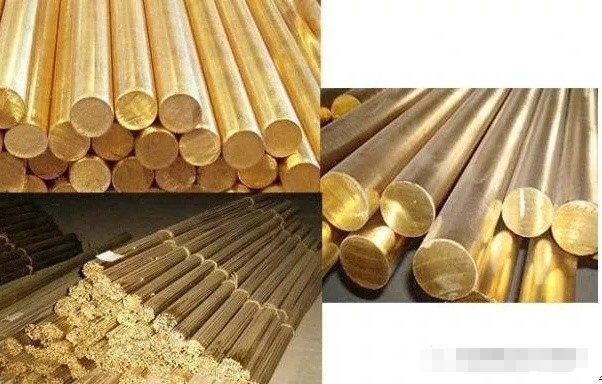
Bronze is a copper-based alloy of tin, zinc, and other metals. Not only does it have excellent corrosion resistance and high strength, but it is also particularly suitable for precision casting due to its moderate melting point and good fluidity. Compared with iron or stainless steel, bronze has a softer and warmer expressive power when showing the character’s demeanor and texture details.
The most compatible technical partner with bronze is known as the “soul of sculpture” of the lost wax process. This technique has a long history, dating back to the third millennium BC in ancient India. Its essence lies in the three key steps of “molding with wax, removing the wax with fire, and casting with bronze”, which not only preserves the original details but also has a high degree of restoration and stability, making it the preferred process for museum-quality sculptures and artists’ works today.
From Idea to Prototype: The Starting Point of Sculpture Creation
Every bronze sculpture is born from the germ of an idea. Whether it is a sketch in the artist’s hand or a computer-generated three-dimensional model, it must eventually be reduced to a three-dimensional prototype for subsequent molding and casting.
Miniature production
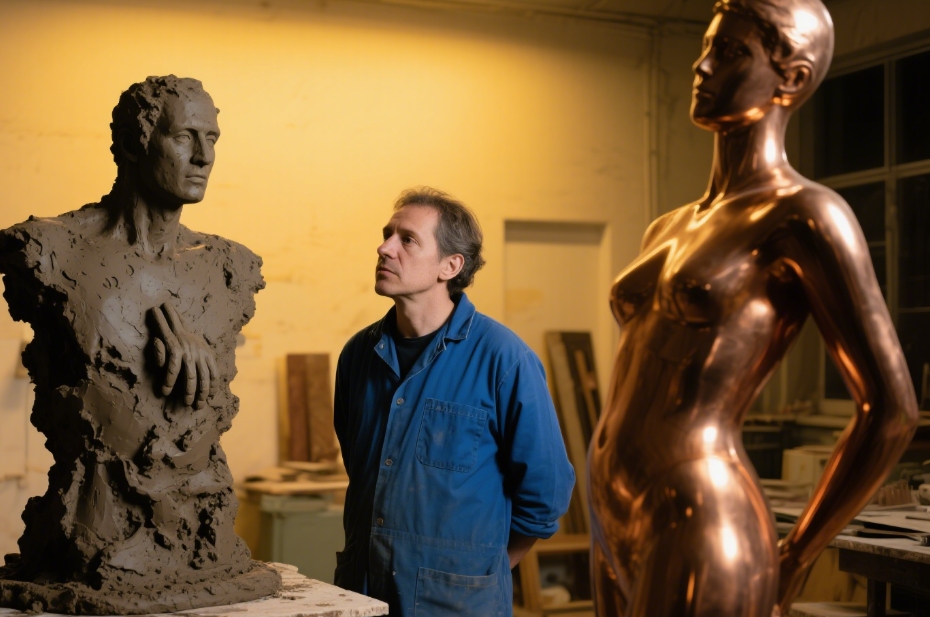
Often, the artist will begin by making a scaled-down model in oiled clay, clay, or industrial wax. This not only helps to confirm the overall proportions and dynamics, but also gives the client a preview of how the sculpture will look visually. The miniature stage is crucial for the initial shaping of the sculpture’s language, which is often constantly revised to polish the ideal composition.
Scaffolding and Scale-up
When a prototype is to be scaled up (e.g., a large statue for a city square or museum), an internal steel support frame needs to be constructed to ensure that it does not deform during the modeling and transportation process. This “skeleton” structure not only supports the modeling material but also provides the basis for subsequent segmental molding and casting.
Precision Reproduction: Core Technology for Mold Making
Once the prototype is complete, the next step is to make the mold. This step determines the clarity and integrity of the final bronze sculpture. The commonly used mold material is liquid silicone, which is capable of capturing the most minor details of the sculpture, including hair texture and skin texture.
Silicone Layers
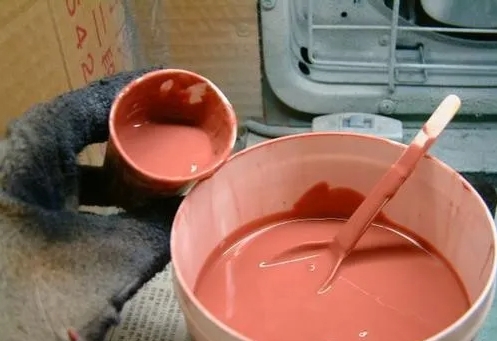
The entire mold is made in several layers. First, the surface of the prototype is brushed with a silicone layer, layer by layer, to ensure that every detail is encapsulated. This is followed by an external reinforcement layer, usually fiberglass or plaster, which forms a “shell” to hold the mold form in place. The entire mold is often constructed in multiple pieces to allow for easy disassembly and reshaping of the wax mold.
Precision and release
Once the mold is cured, it needs to be carefully removed from the prototype. Each piece of the mold needs to be numbered and processed for precise positioning to ensure that there is no misalignment or distortion when subsequent wax molds are put together.
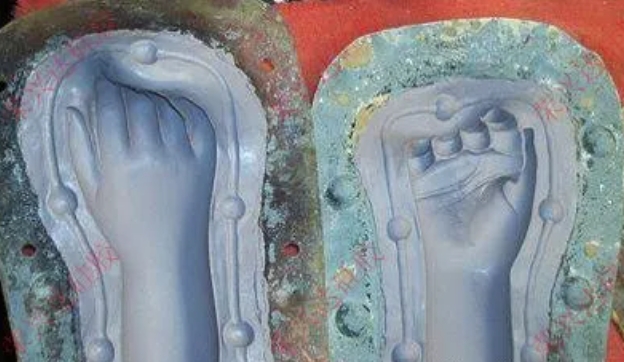
Design of the wax mold reproduction and casting system: making creative “reproduction” possible
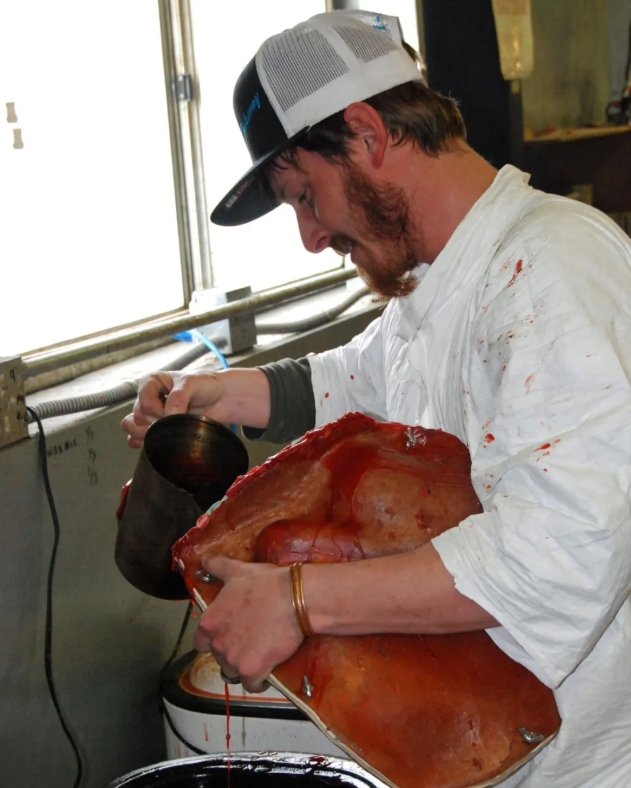
After the silicone and shell molds have been completed, the artist will start pouring hot wax to create the intermediate medium, the wax mold. This stage is not only a fine reproduction of the sculptural prototype, but also lays the foundation for the subsequent casting.
The wax is usually heated to a liquid state at around 65°C and is then evenly applied to the inside of the mold by the “spinning” or “brushing” method to form a layer 3-5 mm thick. The rotary infusion ensures a homogeneous, bubble-free wax layer, which is remarkably accurate in capturing details. Once cooled and removed, each wax mold is refined by removing seams, repairing details, and even re-engraving local textures.
The artisan then installs the complete “pouring system” on the mold, including sprues, risers, and air holes. These wax bars form the pipes that determine how the bronze will flow, cool, and vent during the casting process, directly affecting the quality of the final casting.
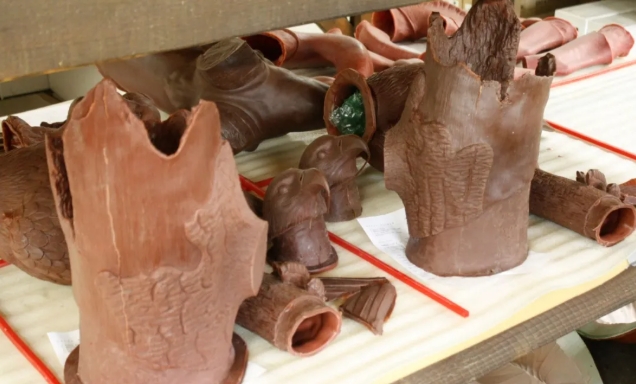
Shell building and high-temperature dewaxing: preparing the container for the metal
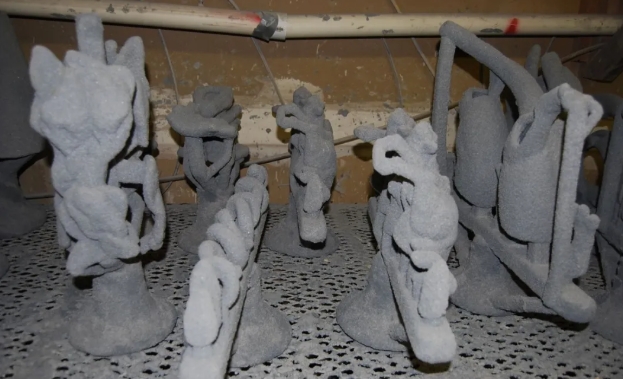
After the wax molds have been completed, the “shell building” part of the lost wax method is crucial. Each mold is repeatedly dipped in a mortar and covered with refractory sand in 6-8 layers. Each layer is dried for 12-24 hours before the next step, which usually takes a week.
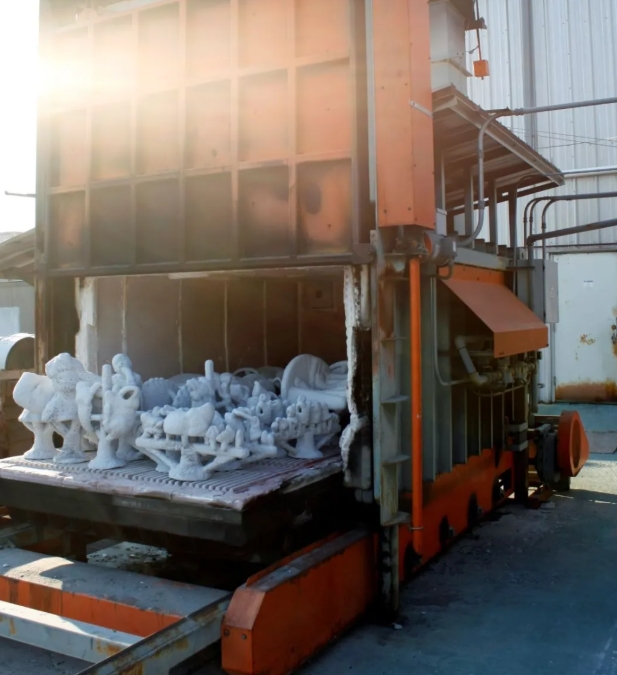
After drying, the shells are placed in a roaster to be “waxed”. Preheating at 300-400°C melts the wax molds out of the shells, which are then heated to approximately 900°C to harden further and sinter the shells. This not only empties the interior space but also makes the shell strong enough to withstand the high temperatures of the subsequent metal.
At this point, a completely hollow, robust, and heat-resistant cast is completed and ready to be injected with bronze.
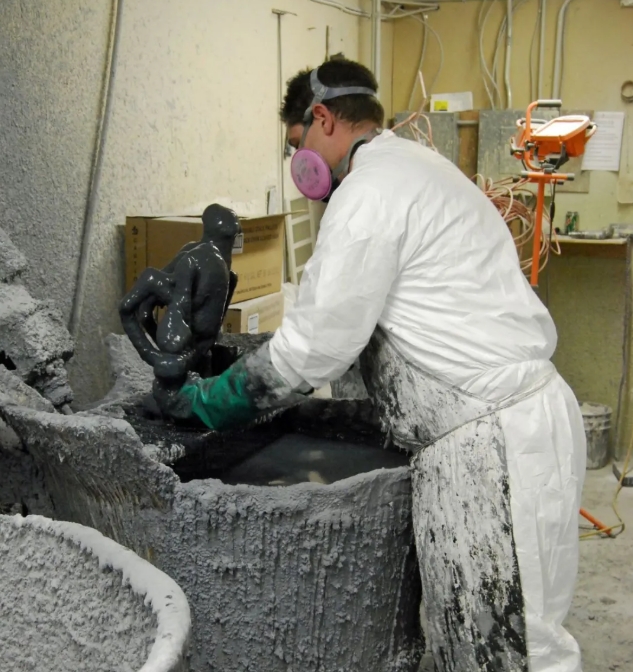
Molten Bronze and Metal Pouring: The Moment of Breathing Life into Sculpture
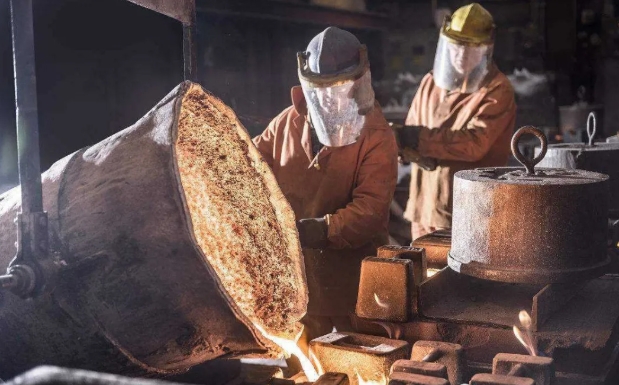
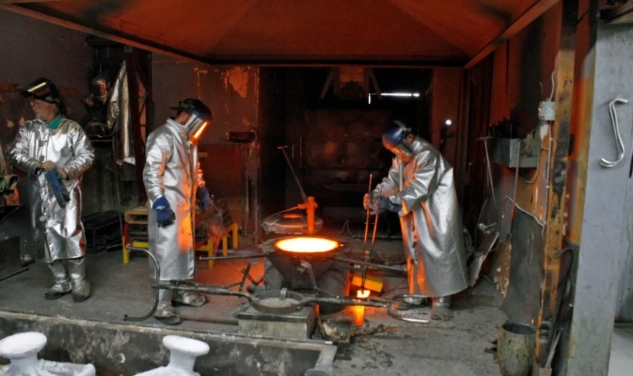
Bronze is made by melting copper, tin, and zinc in specific proportions and has a melting point of around 1000°C. Once melted, the liquid metal is injected into the shell in a very short time. After melting, the liquid metal has to be injected into the shell within a very short time.
In order to ensure a successful casting, the pouring process must be continuous and fast to avoid porosity and cold segregation. For small sculptures, gravity pouring is often used; for large or complex shapes, centrifugal force or vacuum casting techniques may be required to ensure that the metal fills all the detailed spaces smoothly.
Once the metal has flowed into the shell, a natural cooling period (usually a few hours to a day) is required before the sculpture is truly “set”.
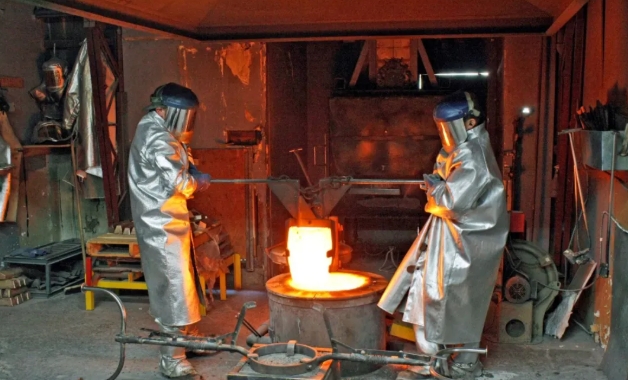

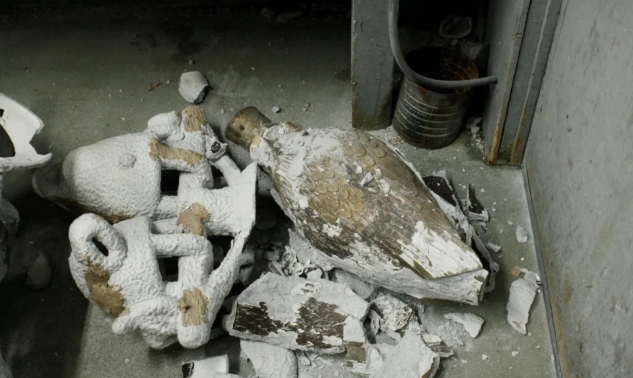
Shell removal and metal polishing: unveiling the first bronze forms
The cooled casting is released from the clay shell in a process known as “decasing”. The shell is usually broken down by hand or sandblasted away to reveal the first bronze sculpture.
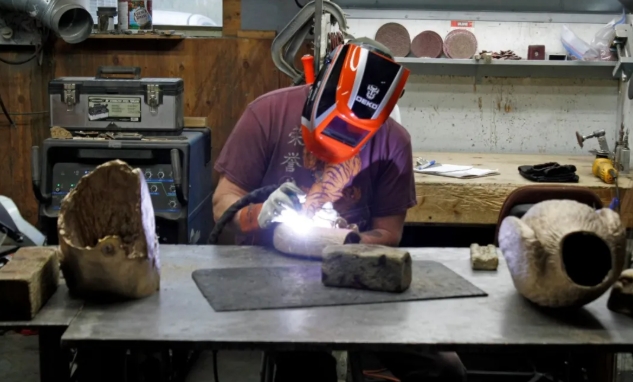
At this point, the sculpture often has sprue residue, welds, and surface burrs. The craftsman will remove the sprue with a gas cut or grinding wheel, then polish and shape it. If the sculpture is cast in multiple sections, it will be precision welded, and the welds will be polished again to ensure that there are no detectable traces of stitching on the exterior.
The finishing of each detail is both technical work and artistic reproduction.
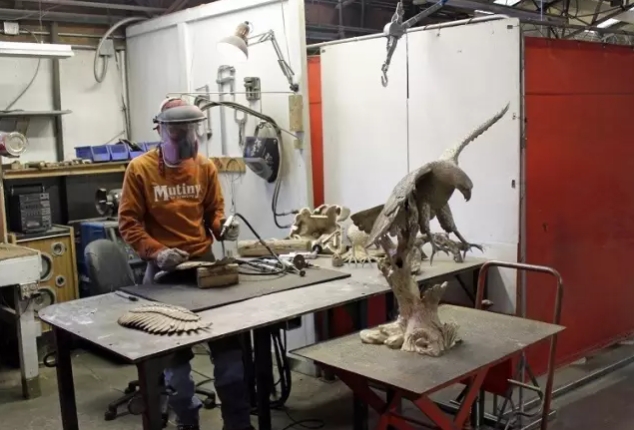
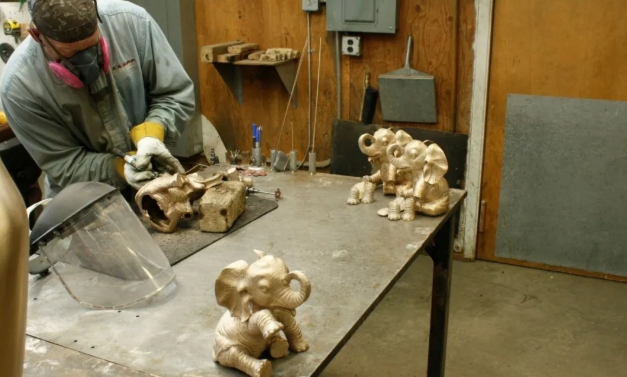
Patina coloring process: giving bronze sculptures a unique visual language
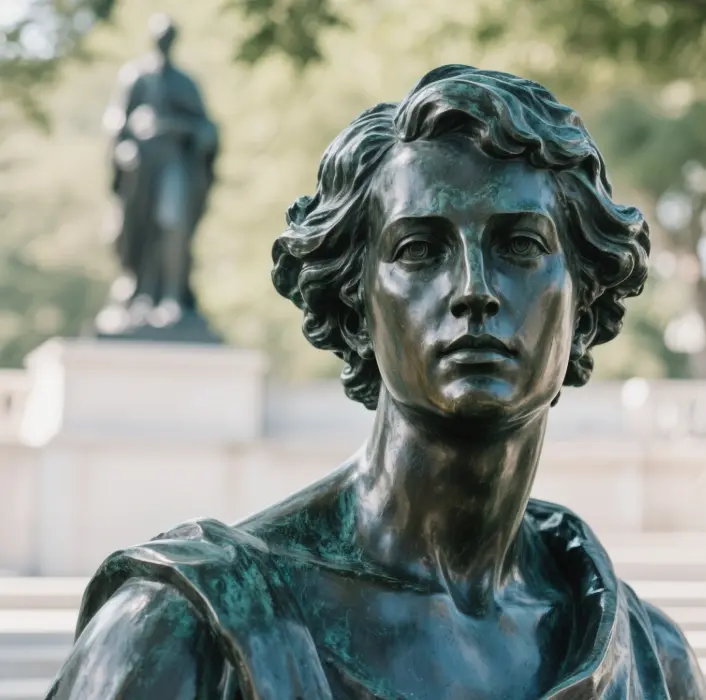
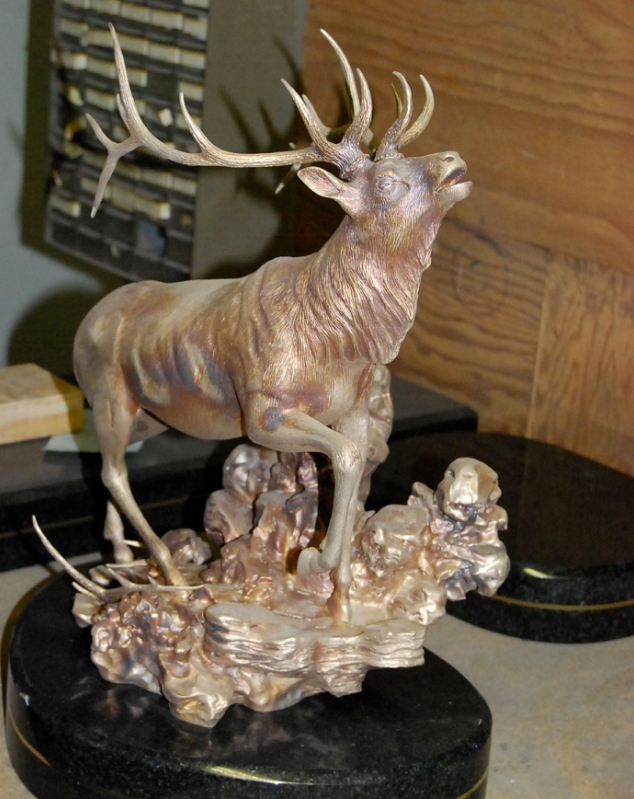
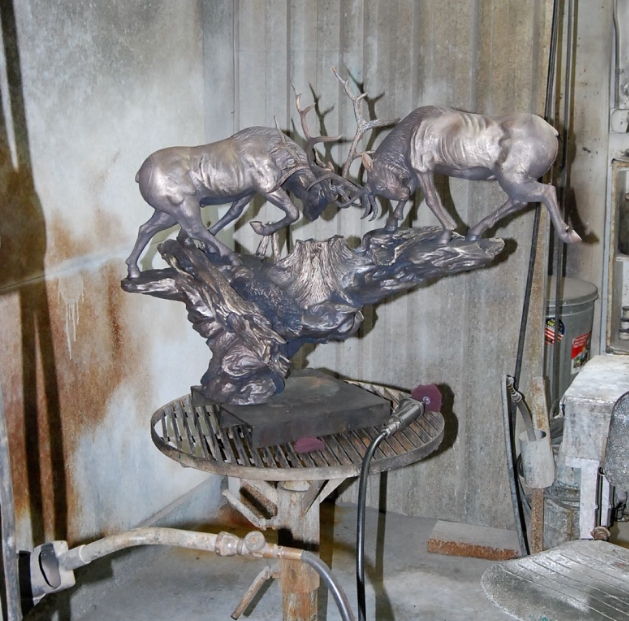
Patina, i.e., the chemical coloring layer on the surface of bronze, is a key step for the artist to provide the sculpture with an “aura”. It not only determines the visual style of the sculpture, but also enhances the corrosion resistance of the material.
Standard coloring methods include:
- Copper green: using copper sulfate or copper chloride to present a classical green patina;
- Black: using potassium sulfide to bring a deep, restrained, modern texture;
- Brown and gold: relying on ferric nitrate, silver nitrate, and other chemicals to express a warm, historical texture.
The whole process needs to be combined with heating, so that the agents react more fully with the copper surface. The artist can achieve a richly layered and durable visual effect through multiple colorings and local processing.
Wax protection and preservation advice: keeping your sculpture alive for years to come
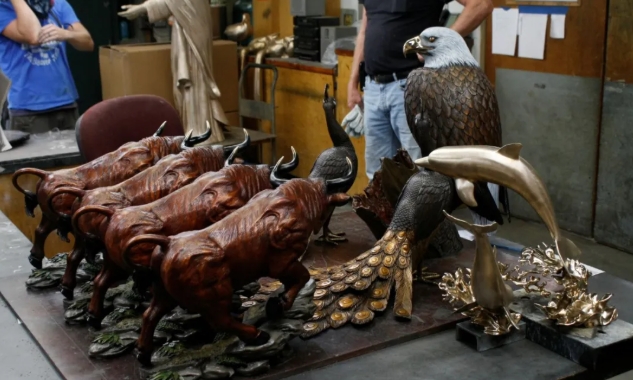
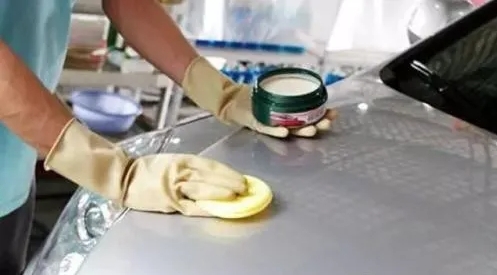
Once Patina is finished, the sculpture is coated with a specialized sealing wax or clear varnish. Microcrystalline waxes are commonly used and are particularly suitable for outdoor displays, as they insulate the sculpture from air and moisture and slow down the oxidation process.
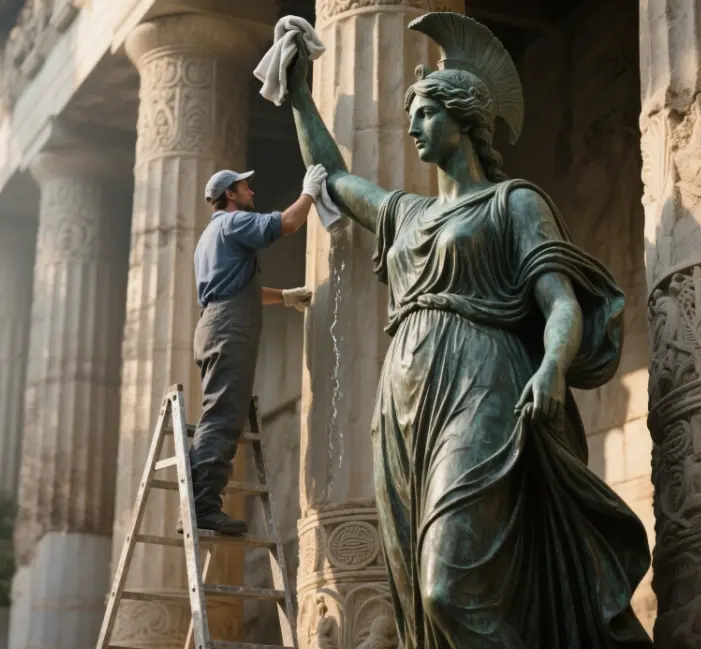
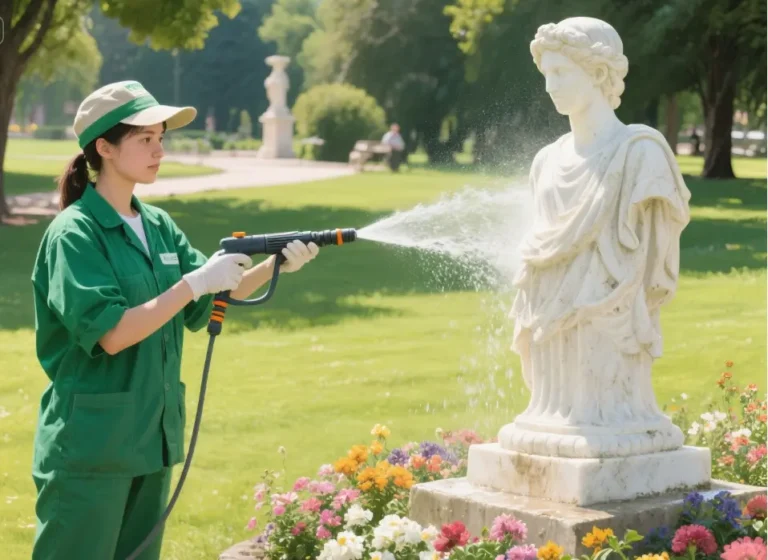
After sealing, the sculpture should be left for 24 hours to stabilize the color. If the sculpture is for outdoor display, it is recommended to re-seal the wax once a year. When cleaning the sculpture, use a dry cloth to wipe it and avoid contact with strong acids and alkalis.
This is not only a protective step, but also a final finishing touch to the piece.
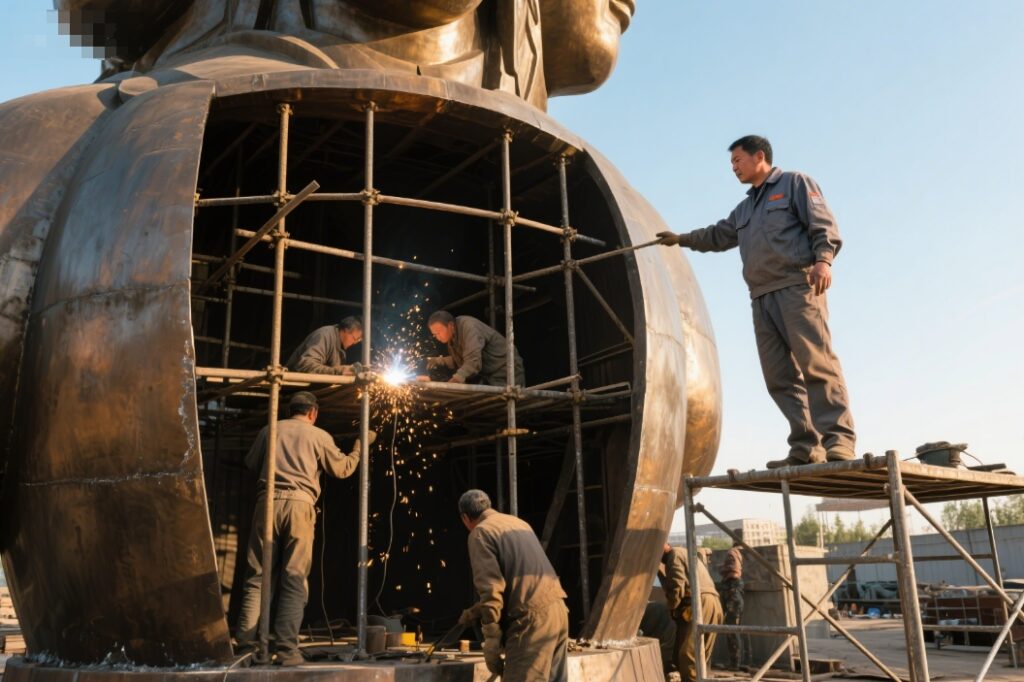
Large Bronze Sculpture: Segmental Casting and Intelligent Layout of Internal Structure
Faced with a height of 3 meters, 5 meters or even more huge bronze sculpture, the process must be “modular thinking”: first of all, the entire work is broken down into several units (such as the head, torso, base, etc.), respectively, lost wax, casting, and then assembled by welding.
Each part not only needs to be tightly put together, but also the internal welding metal skeleton (such as stainless steel keel) to stabilize the overall structure, to prevent deformation due to metal fatigue or wind pressure. Large sculpture installation site, but also requires sophisticated lifting equipment and engineering management, before landing safely.
Applications and Typical Cases
Lost-wax bronzes have long transcended the boundaries of traditional fine art and are widely used in monuments, town squares, museum exhibits, and even private villas and gardens.
- Oscars: Each gold statue is cast in lost wax and then covered with gold leaf.
- Sculptures at the home of Bill Gates: Several sculptures of people in his private art gallery are also made of bronze, demonstrating respect and eternity.
- China City Sculpture Program: In recent years, large-scale public sculptures in Beijing, Shanghai, and other places have been made of bronze, demonstrating their durability and aesthetic versatility.

Frequently Asked Questions
Is bronze sculpture easy to oxidize? Does it need maintenance?
Bronze will naturally form an oxidized film (i.e., Patina), which in turn protects the interior from erosion. Regular maintenance after wax sealing is sufficient; frequent scrubbing is not recommended.
What size of sculpture is suitable for the Lost Wax Method?
Theoretically, there is no size limitation, from prominent city landmarks to small busts, and a reasonable segmentation and pouring scheme is needed.
What should I do if the sculpture is cracked?
Most of them can be repaired by cold welding and then sanded and colored. However, if it is a structural problem, it may need to be dismantled and recast.
The customization process of bronze sculpture: a collaborative journey from idea to entity
For customers who want to customize an exclusive bronze sculpture, a straightforward process and smooth communication are the key to guaranteeing the quality of the finished product. The following are common steps in customizing bronze sculpture:
- Proposal and sketch stage
Customers put forward the creative direction (figures, animals, abstract shapes, etc.) or provide reference drawings, and the artist, according to the needs of the sketch, makes the initial determination of the sculpture size, posture, and style.
- Miniature modeling
Based on the sketches, the artist creates a scaled-down model (Maquette), usually in oil or clay. At this stage, several revisions can be made to ensure that the composition, proportions, and dynamics are precise. 3.
- Formal Prototype Sculpture
After the client has confirmed the prototype, the artist will sculpt the prototype according to the agreed dimensions, usually in oil clay or industrial wax, which is suitable for the subsequent lost wax reproduction process.
- Mold and wax modeling
The prototype is turned into a silicone mold, from which a wax model is made, ready for the casting stage.
- Casting and surface treatment
Following the lost wax process, the bronze is cast, and after cooling, it is soldered, polished, and colored to create the final texture.
- Confirmation and Delivery
After the sculpture is completed, photos or videos will be taken to confirm that the customer is satisfied with the sculpture, and then we will arrange packaging and shipment, which can be delivered both at home and abroad.
The whole process usually takes 30~90 days, depending on the size and complexity of the sculpture. For outdoor monumental sculptures and large-scale projects, delivery can be done in stages.
Price calculation: How is the cost of a bronze sculpture composed?
The price of a bronze sculpture is not a one-bite price, but is determined by several factors:
| Influencing Factors | Description |
| Size and Volume | The larger the sculpture, the more bronze material is used, and the higher the production labor hours, which is one of the most central variables in the price. |
| Modeling Complexity | Complex textures, dynamic limbs, and localized fine carving can significantly increase the cost of wax modeling and polishing. Surface Finishing Special Patina coloring, gold leaf coating, |
| Surface Finishing | Large sculptures usually need to be disassembled into several modules for casting and then welded, with complex structural support, a long production cycle, and a higher price. |
| Whether it is made in sections or not | Large sculptures usually need to be disassembled into several modules for casting and then welded, with complex structural support, long production cycle, and a higher price. |
| Transportation and Installation | Especially for oversized sculptures, packing, lifting, transportation, floor installation, etc., require a professional team, and the cost is extra. |
For example:
- 30cm Tabletop Sculpture: Approx. $500~$1,500
- Life-size figure (1.8m): Approx. $5,000~$15,000
- Urban Landmark Sculpture (5m+): Budget may range from $30,000~$200,000 depending on the structure and level of craftsmanship.
Many factories will also quote by the kilogram ($40-$80/kg), but it is more common to quote the whole package of “size + sculpture complexity + workmanship + installation services”.
For quotation, it is recommended to prepare sketches or descriptions with key information such as dimensions, usage (indoor/outdoor), etc., and the factory can provide an accurate estimate within 24 hours.
Transportation and Installation: Getting the Sculpture to the Site Safely and in One Piece
Large bronze sculptures are usually worth a lot of money, so safe transportation and professional installation should not be neglected. The following is the complete process from packing to landing:
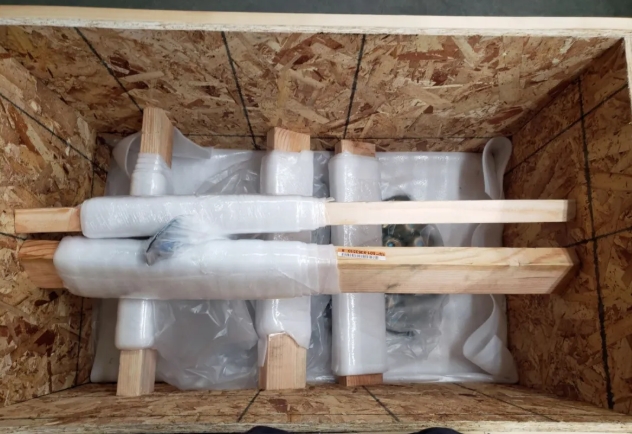
Safe packing
The finished sculpture will be packed in a wooden box + foam board protection, and some high-value sculptures will also be reinforced with metal frames to ensure that there is no risk of bumping or scratching during transportation.
Domestic and international transportation
We support sea and air transportation, and can deliver to Europe/USA within 30~45 days with complete documents (e.g., certificate of origin, customs declaration).
Installation assistance
For heavy sculptures, lifting equipment (e.g., forklift, crane) is required, and workers will assist in calibrating the direction and reinforcing the base when landing. Some factories can send an installation team on-site service to ensure accurate positioning, safety, and stability.
Foundation and protection recommendations
Outdoor sculpture installation needs to design the foundation in advance (concrete foundation, pre-embedded bolts, etc.), and it is recommended to add a lightning arrester, an anticorrosion layer, nameplates, and other extended accessories after the installation is completed.
In the overall process, it is recommended that customers confirm the conditions of the installation site in advance, coordinate the transportation time, and the factory can also provide installation manuals or remote guidance.