Sculpture style is not only the label of modeling language, but also the comprehensive result of the concept of the times, material selection, technique innovation, and aesthetic orientation. If you want to understand Sculpture systematically – whether you are an art lover, a learner, or a collector – you must first know how to look at different styles, how to divide them, where the difference lies, and who they are suitable for.
This article will start from a multi-dimensional perspective: according to the form (roundel, bas-relief, installation), according to the expression (figurative, abstract, conceptual), according to the historical lineage (classical, modern, contemporary) to the material process (bronze, stone, resin, mixed media), to help you put the “style of sculpture” this matter clear. After reading it, you will no longer only say “nice/not nice”, but can accurately determine: what kind of style it is, why it does so, and what it wants to express. Next, we will begin with the “categorization method” to break down the panoramic map of sculpture styles.
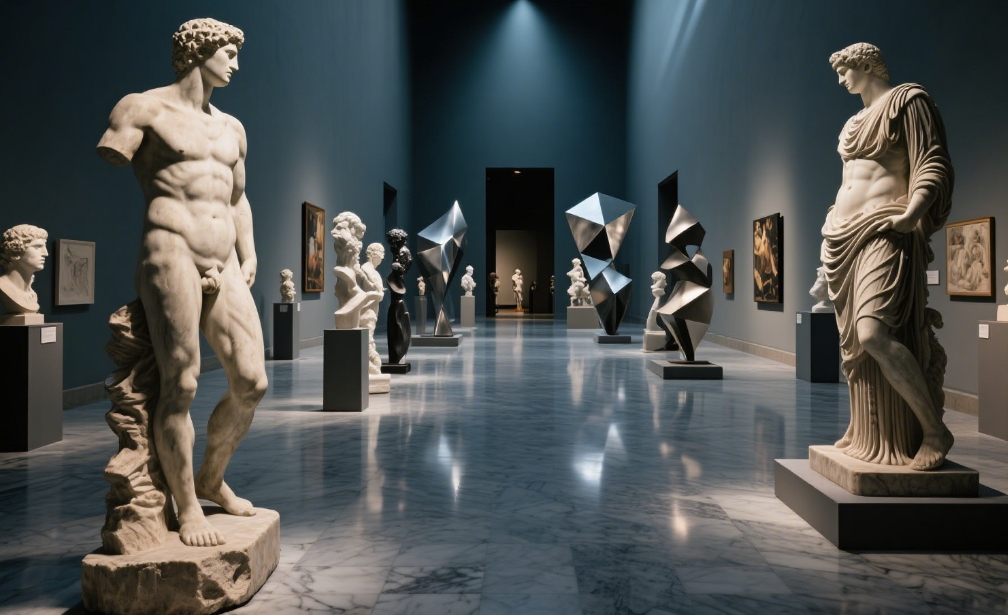
The fundamental categorization dimension of Sculpture
According to the relationship between form and space
- Round Sculpture (Full-round Sculpture): can be viewed from all sides and can be viewed in a circular manner (e.g., David).
- Relief: attached to a flat surface, with different degrees of projection (high relief/low relief).
- Openwork / Pierced Sculpture: the material is pierced, and light and space become part of the language.
- Installation Sculpture: interacting with the space and audience, the overall environment is the work.
According to the degree of expression, vocabulary, and image
- Figurative / Realistic: Emphasize anatomy, proportion, details, and restore specific characters or objects.
- Symbolism/Expressionism: deformation, exaggeration, emphasis on emotions and symbols.
- Abstraction / Conceptual: Weak reproduction, focusing on form, structure, concept, or material experimentation.
According to the material and process media
- Traditional materials include stone (such as marble and granite), bronze, wood, and terra cotta.
- Modern materials include stainless steel, fiberglass, resin, and concrete.
- New/mixed media: electronic components, light, sound, 3D printing, and other cross-border materials.
By Function and Exhibition Area
- Religious / Memorial Sculpture: to serve ceremonies, commemorate historical figures or events.
- Public Art / Urban Sculpture: Intervention in urban space to convey urban culture and landscape aesthetics.
- Decorative/Home Art: small size, diverse themes, serving the aesthetics of private space.
- Exhibition / Experimental works emphasize conceptual expression and interactive experiences, often found in art museums and contemporary art exhibitions.
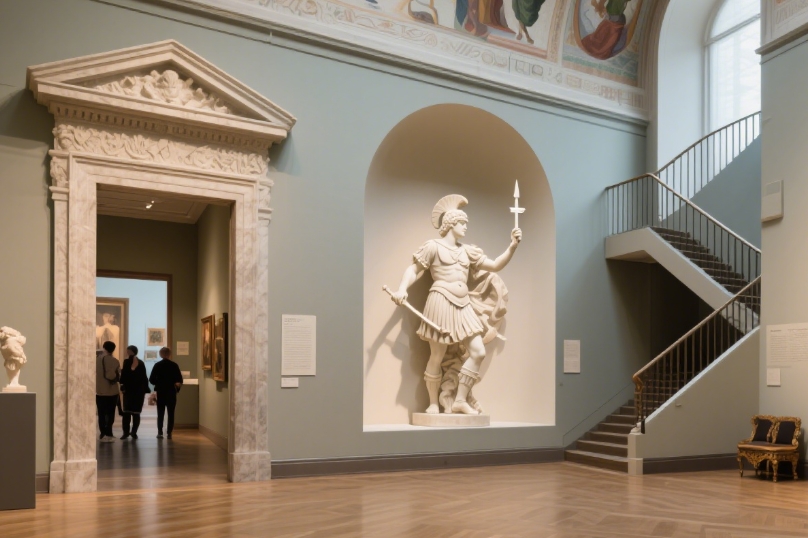
Three Core Paths of Sculptural Expression: Figurative, Expressive, and Abstract
When categorizing styles of Sculpture, in addition to focusing on material and form, another key dimension is the path of sculpture expression. This determines how the artist conveys their intentions and communicates with the audience. It can be roughly categorized into three types of expression, each with a unique historical context and aesthetic underpinnings.
Figurative Sculpture: with “reproduction” as the core
Figurative Sculpture is the oldest category, emphasizing the faithful depiction of real-world figures, animals, or natural objects. It conveys “visual reality” through accurate proportions, clear structures, and delicate surface treatments.
Typical Characteristics:
- Structural and anatomical precision was standard in ancient Greek and Renaissance Sculpture.
- Emphasis is placed on the naturalistic portrayal of facial expressions, dynamic gestures, and the flow of clothing.
- Modern figurative Sculpture has also been personalized in terms of realism.
Examples: Michelangelo’s David, Auguste Rodin’s The Thinker.
Expressive Sculpture: Reinforcement of Subjectivity and Emotion
Expressionist Sculpture developed from the modernist trend in the early 20th century, emphasizing the artist’s personal feelings, psychological state, and even social criticism. It may still “resemble” a particular image, but not to reproduce reality, but to “emphasize feelings”.
Typical features:
- Exaggeration of movement, stretching of proportions, and deformation of structure are standard techniques employed in this style.
- The material is handled roughly and without detail, emphasizing the “sense of presence” and “impact” of the work.
- Often used to express pain, depression, protest, or spiritual tension.
Examples: Giacometti’s slender figure sculptures, Catherine Argyle’s dynamic horse series.
Abstract and Conceptual Sculpture (Abstract / Conceptual Sculpture): focusing on structure and thinking.
Abstract Sculpture breaks through the framework of “reproduction” and ‘image’, and, instead of pursuing “what it looks like”, it emphasizes the logic of composition, the rhythm of form, the contrast of materials, and even the philosophical point of view represented by the work. It does not pursue “what it looks like” but emphasizes compositional logic, formal rhythm, material contrast, and even the philosophical viewpoint represented by the work. Many contemporary sculptures have shifted from “entity” to “concept”.
Typical features:
- Bold use of materials (e.g., mirrored metal, concrete, glass, fabric).
- More concerned with ‘spatiality’, ‘dynamic relationship ’, or ‘thought triggers’.
- Can be conceptualized through symbols and devices without explicit form.
Examples include Richard Serra’s curved steel sculptures and Anish Kapoor’s Cloud Gate.
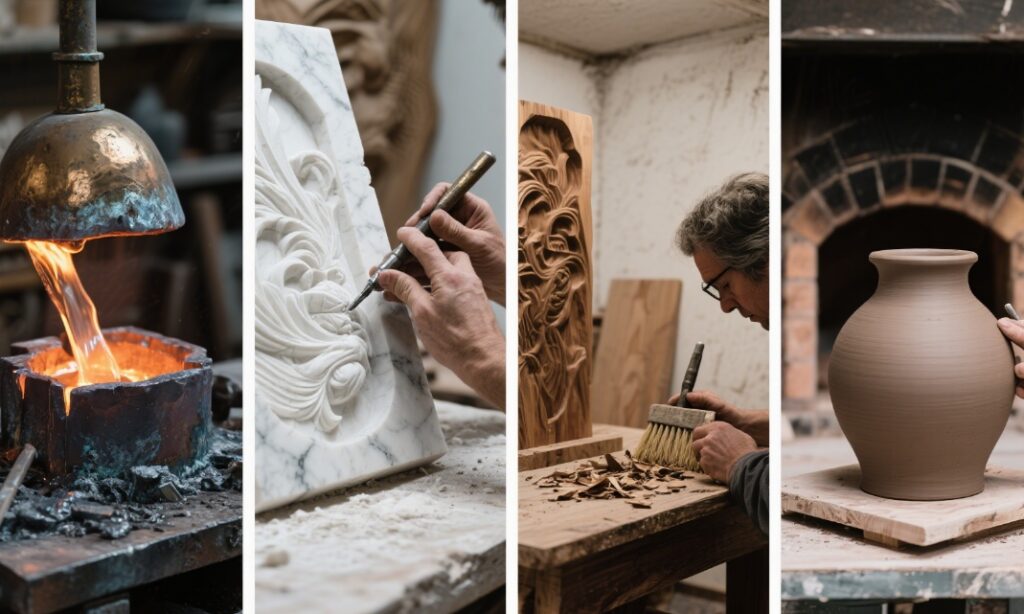
The basic structural forms of Sculpture: roundel, bas-relief, and relief
To understand the style of Sculpture, it is not only necessary to pay attention to the emotional path and historical context of artistic expression, but also to grasp its most fundamental structural form. This is the key dimension of how a sculpture is “three-dimensionally rendered” in three-dimensional space. Different structural types not only affect the way of viewing, but also determine the applicable scenarios and production processes.
Free-standing Sculpture: Three-dimensional in three dimensions
Free-standing Sculpture, also known as three-dimensional Sculpture, is a free-standing sculpture that can be viewed from multiple angles (usually 360 degrees). It is not attached to the background wall or carrier; it entirely exists in space.
Typical Features:
Usually bronze, marble, wood, stainless steel, and other solid materials;
Need to consider the structural stability, support points, and the visual unity of multiple angles;
Outdoor public art, such as memorial statues, is often in the form of round sculptures.
Examples: Statue of Liberty, Michelangelo’s David.
Relief sculpture (Relief Sculpture): the wall of the “semi-stereoscopic”
Relief sculpture is the sculpting of the Sculpture and the background surface as one. It has a flat decorative, but also retains a certain sense of three-dimensionality, and is one of the most common types of architectural Sculpture.
Relief can be subdivided by degree of prominence:
- High Relief (High Relief): carving part of the background more prominently, visually close to the round carving;
- Shallow Relief (Bas-relief): carving level is shallow, suitable for complex patterns, long scrolls of narrative;
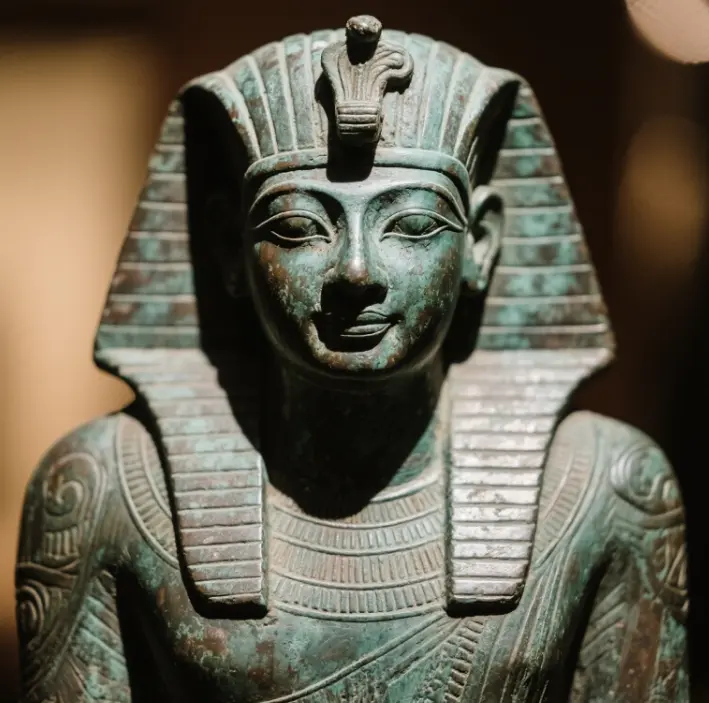
- Concave Carving (Sunken Relief): a pattern of inward carving in the background, commonly found on ancient Egyptian walls.
Application Scene:
Ancient temples, architectural walls, and mausoleum decoration;
Narrative Sculpture on contemporary buildings and monuments.
Examples: the Parthenon relief band and the Terracotta Warriors of Qin Shi Huang’s Mausoleum, an excavated relief.
Transparency (Openwork Sculpture): the rhythmic beauty of hollowing out
Openwork Sculpture, also known as skeletonization, is a sculpture in which part of the material is completely removed to form a permeable structure, allowing light and background to penetrate the work. It combines the three-dimensional beauty of Sculpture with the artistic logic of “white space”.
Typical Characteristics:
- Mainly used for decorative works, such as screens, window panes, and religious artifacts;
- During the carving process, the mechanical structure must be precisely controlled to prevent collapse.
- Often combined with wood carving, jade carving, and metal casting to show the precision of craftsmanship.
Examples: traditional Chinese wooden window patterns, stone window panes in Western Gothic churches, and exquisite bronze openwork incense burners.
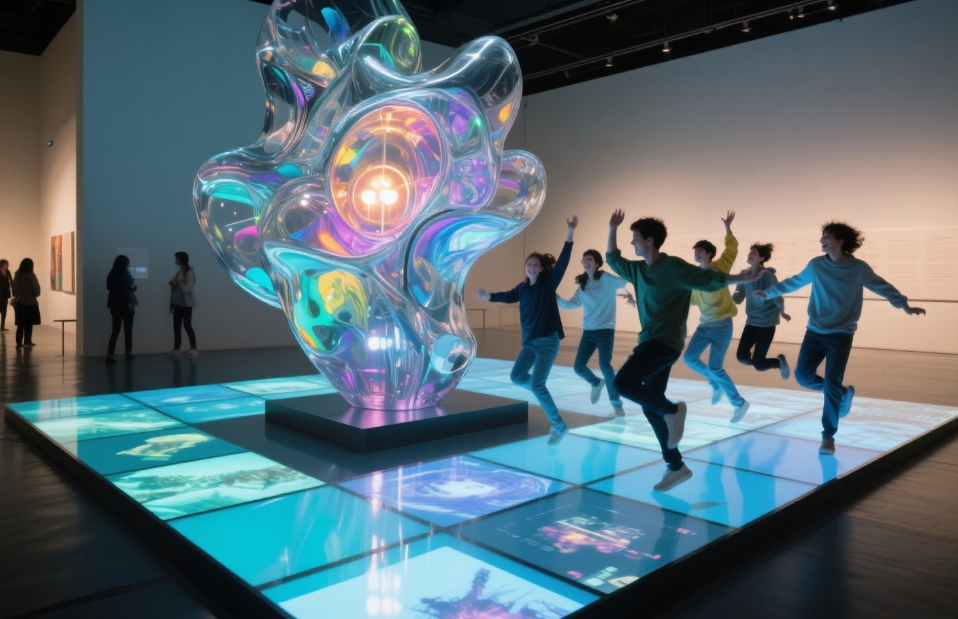
Contemporary Expressions: From Installation Art to Environmental Sculpture
With the continuous expansion of art concepts in the 20th century, Sculpturee has gradually shifted from a “static form” to a “conceptual intervention” medium. Modern and contemporary Sculpture has not only realized breakthroughs in materials and technology, but also entered a new field in space, time, and interactivity. Traditional round Sculpture and relief sculpture are no longer the only choices; contemporary Sculpture emphasizes audience experience, contextual expression, and social issues.
Installation Art: Space is the Medium
Installation art is the most representative form of contemporary sculpture, extending the medium to integrate sculpture, architecture, video, sound, and even performance art, emphasizing the dialogue between the work, the space, and the audience.
Core Characteristics:
Emphasizing “field” and “relationship”, the audience is often wrapped up in the works;
Mostly using mixed media: metal, fabric, light, sound, video, etc.;
The works are often temporary and on-site, contrasting with the permanence of traditional Sculpture.
Representative examples:
- Yayoi Kusama’s Infinity Mirror Room;
- Anish Kapoor’s The Bean;
- Joseph Beuys’s theory of social Sculpture regards people and society as “sculpturable” objects. Joseph Beuys’ theory of social Sculpture regards people and society as “sculpturable” objects.
Environmental Sculpture: Artistic Implantation in Nature
Environmental Sculpture is a way of expression that organically integrates works into natural landscapes or urban public spaces, emphasizing the symbiosis between sculpture and the environment.
The main form:
- Land Art: creating giant landform works with natural materials, such as Robert Smithson’s Spiral Breakwater;
- Urban Public Art: Sculpture becomes a city’s cultural symbol and a landmark in the landscape, such as Chicago’s Cloud Gate and the Sculpture Plaza in Beijing’s Olympic Park.
Artistic value:
- Change the traditional sculpture “static observation” way of receiving, and let the work become part of the environment.
- with education, commemoration, decoration, and interactive functions;
- emphasize the ecological awareness, community participation, and spatial aesthetics.
Interactive Sculpture: the audience becomes part of the work.
InteractiveSculpturee is a product of the integration of technology and art, encouraging the audience to participate, touch, manipulate, and even behaviorally “complete” the work.
Typical characteristics:
- Mostly using sensors, mechanical devices, and lighting control systems;
- Combining sound, movement, or digital technology (e.g,.AR, projection);
- Changing the way the audience “watches” the art, emphasizing participation and emotional connection.
Applications:
- Children’s play sculptures: works that can be both “played” and “seen” in parks;
- Immersive sculpture experiences in science and technology art festivals;
- Interactive museum exhibits allow viewers to activate changes in the sculptures based on provided prompts.
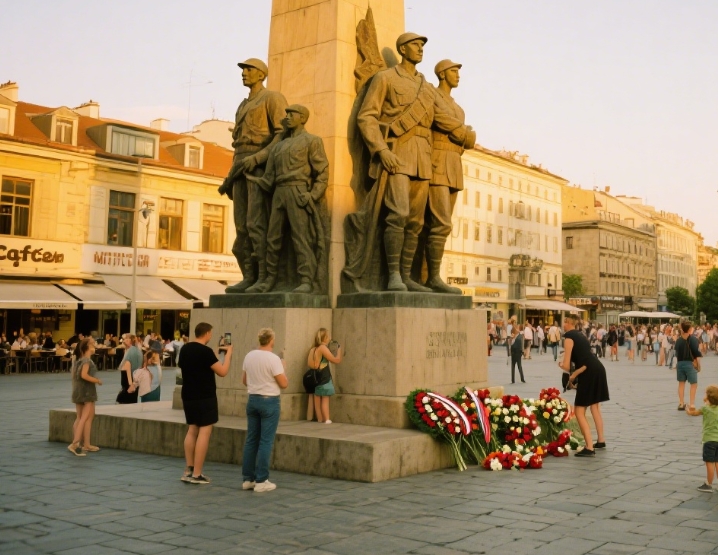
Public Art and Memorial Sculpture: How Style Serves Narrative and Space?
Public art and monumental sculpture are not only responsible for aesthetics, but also carry multiple functions of historical memory, cultural identity, and public interaction. In this category, the choice of sculpture style often depends on its narrative purpose, site environment, and audience psychology.
Expression Strategy of Urban Sculpture: Simplified Modeling vs. Strong Narrative
In contemporary urban space ,Sculpturee often adopts two expressive orientations:
The Minimalist Approach: through abstract, geometric, and de-detailed language, the sculpture integrates with the urban landscape and reduces visual resistance. For example, Richard Serra’s curved steel works are frequently seen in places like New York, where they don’t speak in images, but stimulate public perception through volume, materials, and paths.
Strong Narrative-Based Sculpture: Through the reproduction of figurative characters and event scenes, it conveys specific historical, cultural, or emotional aspects. For example, the Vietnam Veterans Memorial in Washington, D.C., uses black marble to engrave the names of the fallen, accompanied by a quiet portrait sculpture that strikes the viewer directly in the heart.
Memorial Sculpture and Historical Context Realism is used to commemorate the characters, while abstraction is employed to celebrate the events or ideas.
Realistic style (Realism): often used to commemorate specific historical figures or leaders. Realistic style to strengthen the “sense of presence”, so that the audience can face a “real existence” of people. Such as the Lincoln Memorial statue and the tall bronze statue of Winston Churchill, often depicted in a dignified posture, with realistic clothing patterns that convey authority and reverence.
Abstract and Symbolic (Abstract / Symbolic): When the object is a collective event, abstract ideas (such as freedom, peace) are more suitable for the use of non-figurative language. For example, the “Memorial to the Murdered Jews” in Berlin, Germany, is made up of hundreds of concrete cubes, with no concrete figures, but evokes a strong sense of repression, order, and death.
Consideration of the relationship with the environment and audience: scale, material reflection, accessibility
The spatial expression of ofSculpturee is inseparable from the interaction with the environment and people:
Scale: Memorial sculptures often appear in large scale, highlighting the weight and solemnity of the memorial, while street art sculptures tend to be human scale or even interactive in volume, creating a sense of affinity.
Materials and light: Bronze, granite, marble, and other traditional materials emphasize the monumental and eternal; stainless steel, mirrors, and other modern materials emphasize reflection and environmental dialogue. For example, AnisKapoor’s’s Cloud Gate, with its mirrored structure, absorbs the surrounding landscape and people, making the sculpture itself the “eye of the city”.
Accessibility and Interactivity: Modern public art often breaks the traditional boundary of “untouchability,” encouraging viewers to touch, walk through, and even become participants. For example, “LOVE” sculptures and fountain installations have become “approachable” social scenes in the city.