When we stand before a sculpture, whether it be the idealized form of an ancient Greek athlete or the surging emotions and dynamic movement of a 17th-century statue of a saint, what we see is not merely the art of carving, but a dialogue between two artistic eras. Classical sculpture seeks symmetry, harmony, and the rational beauty of eternity; it is the crystallization of ancient Greek and Roman civilization. Baroque sculpture, however, emerged from religious passion and historical upheaval, captivating hearts with dramatic compositions, exaggerated movements, and intense emotions.
So, what are the key differences between these two styles? This article will delve into the difference between Baroque sculpture and classical sculpture from multiple dimensions, including historical context, artistic language, character depiction, use of light and shadow, and cultural implications. Whether you are an art student, a sculpture collector, or a sculpture enthusiast, these differences will help you better understand the spiritual core behind artistic styles and enhance your perceptual depth when appreciating each sculpture.
Artistic expression techniques: Differences between classical and Baroque sculpture
In sculptural art, the treatment of form, emotion, and light and shadow not only reflects the artist’s technical skill but also the aesthetic values of the era in which they lived. The most significant difference between Baroque and classical sculpture lies in the fundamental differences in these three artistic expression techniques.
Form and Composition: Static Rationality vs. Dynamic Passion
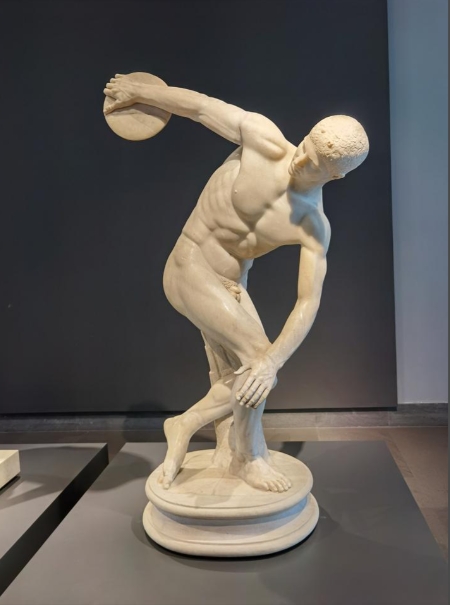
Classical sculpture emphasizes idealized body proportions and symmetrical balance, striving to express eternal harmony in stillness. For example, the famous ancient Greek sculptures “Discus Thrower” and “Spear Bearer” feature figures standing in stable poses with rational muscle lines, showcasing the static beauty of the perfect human body. This “idealized form” and “symmetry” form the core structural concepts of classical art.
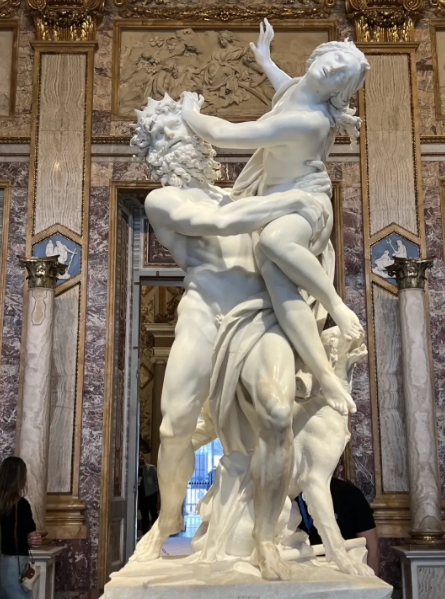
Baroque sculpture, however, is entirely different, pursuing “movement” and “exaggerated poses,” with works brimming with tension and dynamism. The figures’ postures are often frozen in moments of rotation, twisting, or soaring, such as Bernini’s “The Rape of Persephone,” where the straining movements of the body and the flowing curves of the robes make the entire sculpture seem as though it is about to leap out of the space, showcasing exceptional expressiveness and visual appeal.
Emotion and Dramatic Tension: Restrained Divinity vs. Intense Sensitivity
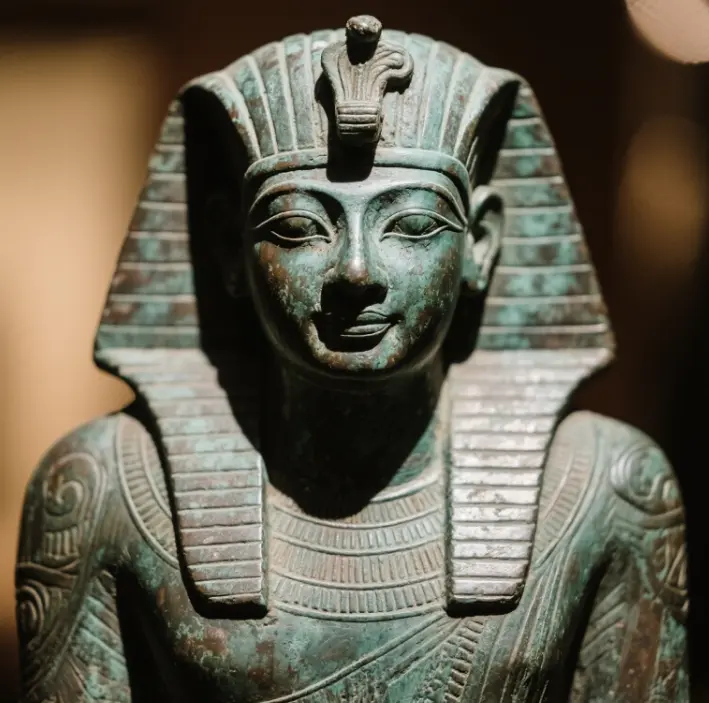
Figures in classical sculpture are often depicted as calm, rational, and solemn, transcending the mundane like deities. Even when emotions are expressed, they are typically restrained and balanced. This “divine aesthetic” emphasizes eternity and order, embodying a “cold sublimity.”
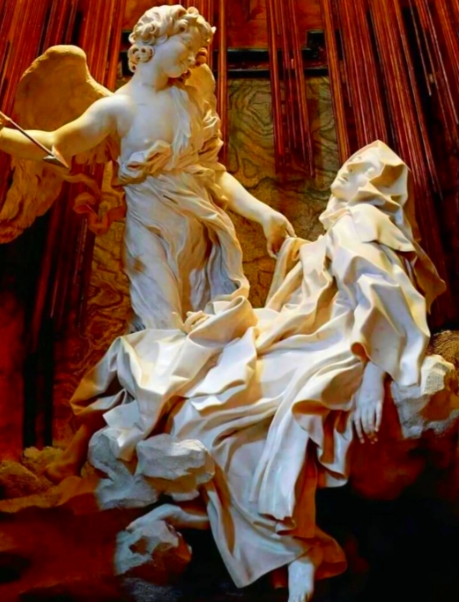
Baroque sculpture, however, centers on “emotional intensity,” vigorously emphasizing emotional tension and inner conflict. Its “dramatic expression” and “theatrical composition” often immerse the audience in the scene. For example, Bernini’s “The Ecstasy of Saint Teresa” captures the moment of religious ecstasy with such sensory impact that it almost takes one’s breath away.
Shadow and Detail Treatment: Natural Softness vs. Strong Contrast
Classical sculpture tends toward natural lighting, with clear overall structure and details that focus on realistic reproduction, pursuing uniform light and dark changes under sunlight to showcase the object’s complete sense of volume.
Baroque sculpture, however, was deeply influenced by the “chiaroscuro” technique in painting, utilizing deep shadows and high-light contrasts to create a substantial visual impact. The complex folds and textures on the surface of sculptures are more conducive to creating a “theater of light and shadow,” enhancing the viewer’s sense of immersion. This approach not only improves the dramatic effect of the sculpture but also breaks down spatial boundaries, enabling the work to interact with its environment.
Thematic Content and Religious Context: From Mythical Ideals to the Redemption of the Soul
Sculpture is not only a representation of form, but also a concrete expression of faith, culture, and power. The thematic content chosen for classical and Baroque sculptures reflects the enormous differences in the spirit of the times in which they were created.
Classical Sculpture: Mythical Ideals and Heroic Epics
Classical sculpture originated from ancient Greek and Roman civilizations, with themes primarily centered around mythological figures, philosophical symbols, and heroic legends. Standard works include the Olympian gods such as Zeus, Athena, and Apollo, as well as heroic figures like Hercules. These figures not only represent divine authority or human virtues but also embody the pursuit of “perfect humanity” during that era.
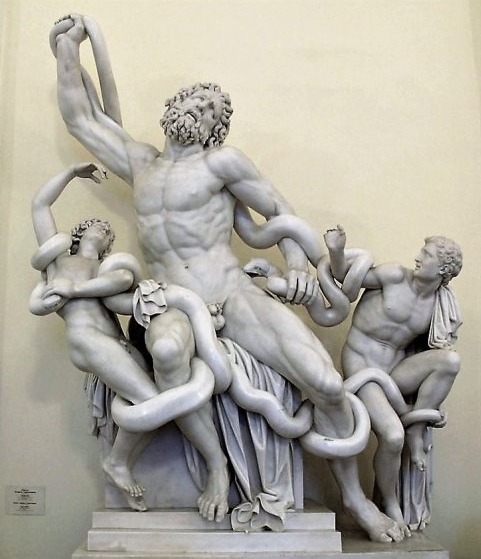
These sculptures were often placed in city squares, temples, or stadiums, embodying a strong sense of public utility and aesthetic appeal. Their functions were both decorative and symbolic, promoting order and rationality. For example, The Discobolus symbolizes the spirit of competition, while Laocoön depicts the conflict between fate and humanity. Though filled with dramatic tension, these works still carry the essential theme of “rationality and order.”
Baroque Sculpture: Religious Zeal and the Limits of Humanity
In the 17th century, Europe was amid the Reformation and Counter-Reformation. The Catholic Church sought to regain the hearts of its followers through artistic means. Baroque sculpture thus emerged, with its themes centering on religious redemption, testimonies of faith, and the martyrdom of saints.
Typical themes include the mystical experiences of Saint Teresa, the martyrdom of Saint Bartholomew, and the spiritual turmoil of Saint Paul’s conversion. These subjects are often depicted within churches and around altars, using the most emotionally charged visual methods to stir the emotions and faith of the audience. This strategy flawlessly aligns with the LSI keywords “religious themes” and “sculptures in cathedrals.”.
Particularly noteworthy are many works depicting martyrdom, which use extreme expressions, agonized body language, and stark contrasts of light and shadow to evoke a soul-stirring sense of the sacred. For example, Bernini’s “The Martyrdom of Saint Lawrence” portrays the struggle between the flesh and faith under flames, pushing the tension between the body and the soul to its limits.
Sculpture and Space: The Distinction Between Publicness and Sacredness
Classical sculpture primarily served public spaces such as squares, temples, and bathhouses, with its aesthetic function closely tied to civic culture, emphasizing universal values and philosophical reflection. In contrast, Baroque sculpture was more oriented toward religious spaces, particularly the interiors of Catholic churches, where its artistic function often aimed to evoke spiritual resonance and emotional impact.
The differing uses of space directly influence sculptural expression strategies: classical sculpture prioritizes the integrity of perspective and rational proportions, while Baroque sculpture employs techniques such as perspective, corner angles, and bird’s-eye views to design works that can be appreciated from multiple angles, achieving a “theatrical fusion” with architecture and light.
Representative Artists and Sculpture Examples: From Michelangelo to Bernini
The most intuitive way to understand style is to analyze the works and creative concepts of representative artists. Although classical and baroque sculptures both use marble as their primary material, the two styles take on entirely different forms in the hands of artists.
Representative Figures and Works of Classical Sculpture
The golden age of classical sculpture can be traced back to ancient Greece, where sculptors such as Phidias and Polykleitos established the standard of “ideal beauty.”
Polykleitos’ Doryphoros is a prime example of the golden ratio in human proportions, perfectly embodying symmetry, static beauty, and rational elegance.
The Parthenon statue of Athena, created under the direction of Phidias, not only achieved technical perfection but also reflected the classical idealization of the divine.
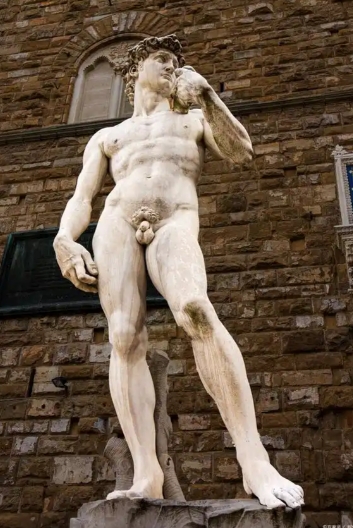
Although Michelangelo belonged to the Renaissance period, his “David” was deeply influenced by the classical spirit and served as a precursor to “Neoclassicism.” The statue’s taut muscle lines and composed expression reflect classical sculpture’s reinterpretation of “ideal humanity.”
These works share a common focus on precise mastery of human anatomy, restrained and unified movement, and a compositional style emphasizing rationality and harmony, thereby embodying the core values of “Greek sculpture,” “idealized beauty,” and “marble sculpture.”
Representative Figures and Works of Baroque Sculpture
In stark contrast to the rational restraint of classical art, the most representative artist of Baroque sculpture is undoubtedly Gian Lorenzo Bernini. He was not only a master sculptor but also an artistic director who seamlessly integrated space, religion, and drama.
The Ecstasy of Saint Teresa
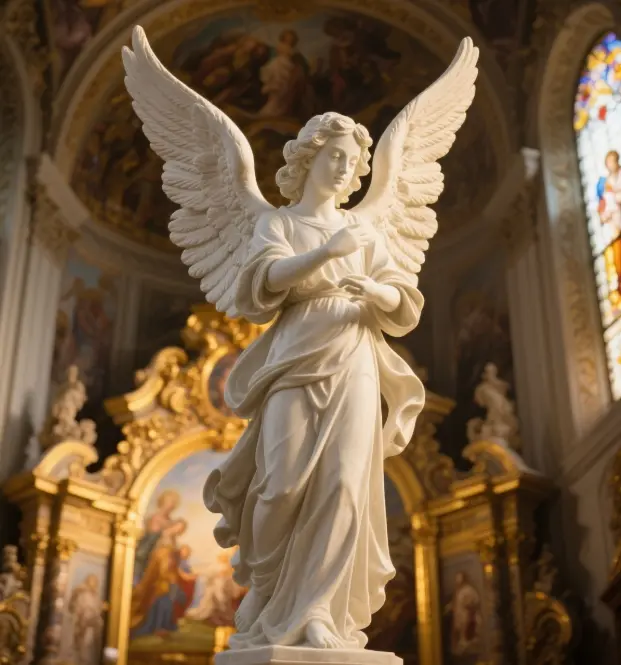
This sculpture is located inside the Church of Santa Maria della Vittoria in Rome and is the pinnacle of Baroque religious art. An angel’s arrow pierces Saint Teresa, and she experiences ecstasy. The entire sculpture seems to freeze a mystical experience, with the figure’s expression full of tension, her robes billowing like a rising curtain, and the natural light from above the church creating an effect of “divine descent.”
Apollo and Daphne
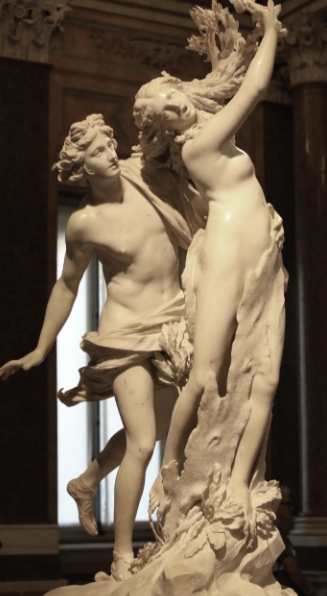
This sculpture depicts the moment when Daphne is transformed into a laurel tree. The figures’ movements are fleeting, with their fingers gradually turning into branches, demonstrating the Baroque mastery of “fleeting moments.” This sculpture cannot be fully appreciated from a single fixed angle; one must walk around it to truly understand its dynamic charm.
David
Compared to Michelangelo’s version, Bernini’s David is depicted in the moment before the shot, with clenched lips and a twisted body, the entire sculpture exuding extreme tension before the explosion, a perfect fusion of “dynamic movement” and “emotion.”
These works fully embody the Baroque language characteristics of “Bernini,” “dramatic expression,” “theatrical composition,” and “movement,” while also utilizing marble, a traditional material, to create an unprecedented emotional impact.
Similarities and Differences in Technique and Materials: From Simple Structures to Complex Interpretations
Although both classical and Baroque sculptures made extensive use of marble as their primary material, they displayed significantly different artistic languages in terms of carving techniques, texture treatment, and spatial layering. These differences not only reflect advances in technique but also demonstrate how different artistic concepts interpret materials.
Common Ground and Differences in Material Selection
Sculpture art from the Classical and Baroque periods both emphasized the malleability and durability of marble. Its delicate texture, complex structure, and natural luster made it an ideal material for depicting human anatomy, clothing folds, and facial expressions.
However, the two periods differed significantly in their approach to material usage:
Classical sculpture emphasizes the structural integrity and unity of the material, striving for a sense of purity and rational order in the overall composition. It is typically carved from a single block of marble, with minimal use of joints.
Baroque sculpture, on the other hand, often combines multiple materials (such as bronze, metal, and colored marble) for use in altars or architectural integrations, aiming for a more intense visual impact. This “multi-material fusion” presents higher technical challenges while enhancing the work’s dramatic effect and religious appeal.
The Evolution and Deepening of Sculpture Techniques
Classical sculpture emphasizes precise proportions and rational composition, with smooth carving techniques that seek harmony and unity in human structure. Low relief is commonly used, blending figures with the background to create a calm and restrained visual effect, suitable for public spaces such as temples or monuments.
Baroque sculpture, on the other hand, seeks to create a substantial visual impact, with bold carving techniques and rich details, particularly noticeable in the texture of skin and clothing folds. High relief (high relief) or even nearly three-dimensional representations are often used, making the figures seem to leap out of the stone and enhancing spatial tension. A classic example is Bernini’s “The Ecstasy of Saint Teresa,” which integrates sculpture, architecture, and lighting effects, embodying the pinnacle of Baroque’s “multi-dimensional expressiveness.”
The Influence of Style and the Development of Art: Two Systems, Two Foundations
Classical and Baroque sculpture are not only artistic achievements of a historical period, but also had a profound influence on the development of art and aesthetic systems in later generations.
Classical Sculpture: The “Native Language” of Western Art
Classical sculpture, with its highly refined emphasis on human proportions, structural beauty, and rational spirit, laid the foundation for Western art. Its style was fully revived during the Renaissance, becoming the core inspiration for the works of masters such as Michelangelo and Leonardo da Vinci.
This pursuit of “eternal beauty” later influenced Neoclassicism in the 18th and 19th centuries and continued to influence modern sculpture, with its influence evident in the works of Rodin, Henry Moore, and others. It is widely recognized as the source of “sculpture evolution.”
Baroque Sculpture: The Explosion of Emotion and Drama
The Baroque style guided art toward sensual expression, dynamic composition, and spatial integration. Its influence extended to religious art, court decoration, stage design, and architectural sculpture, becoming a paradigm of visual narrative.
This style, which emphasizes “instantaneous expression,” has driven modern art’s exploration of time, emotion, and audience engagement, and has provided a historical blueprint for multimedia art and installation art, becoming one of the key sources of “influence on modern sculpture.”
Two major reference systems in contemporary art education
Today, classical and baroque styles are regarded as two major stylistic paradigms in art education: one emphasizes structure and aesthetic norms, while the other promotes expressiveness and spatial thinking. Together, they form the basic language for understanding and creating sculptural works, and are classic approaches that students, artists, and curators cannot ignore.
How to distinguish between Baroque and Classical sculpture styles? A quick identification guide.
Posture and Movement
- Classical Sculpture: Figures are mostly depicted in static standing or balanced poses, with restrained movements and an emphasis on internal structural stability.
- Baroque Sculpture: Commonly features twisted bodies, flowing robes, and frozen moments of movement, filled with tension and dynamism.
Facial expressions and emotions
- Classical: Calm and dignified expressions with almost no emotional fluctuations, emphasizing divine and rational beauty.
- Baroque: Intense facial expressions revealing strong emotions such as pain, ecstasy, and shock, emphasizing the communication of emotions.
Lighting Effects and Detail Levels
- Classical: Overall lighting is natural and unified, with simple details and clear lines.
- Baroque: Strong contrast between light and dark (chiaroscuro technique), complex details such as folds and hair, emphasizing material changes and visual impact.
Space and Composition
- Classical: Suitable for viewing from a frontal perspective, emphasizing stability.
- Baroque: Encourages viewing from multiple angles, with compositions often interacting with the surrounding space and light sources, creating a theatrical effect.
Thematic Clues
Classical: Often depicts mythology, philosophy, and heroic figures.
Baroque: Focuses on religion, martyrdom, and supernatural experiences, with strong plotlines.
Frequently Asked Questions FAQ
Are Baroque sculptures more “realistic”?
A: Not entirely. Although Baroque sculptures are more dynamic and expressive, they pursue “emotional realism” rather than pure realism. They exaggerate movements and expressions to emphasize emotions, falling under the category of “sensual realism.” Classical sculptures, on the other hand, tend toward “rational idealization,” emphasizing ideal proportions and perfect forms.
Does classical sculpture completely lack emotional expression?
A: Not at all. Classical sculpture is indeed more restrained, but that does not mean it is cold. It conveys solemnity, divinity, and rationality, emphasizing eternity and order. Baroque, on the other hand, is an explosion of emotion and the capture of a moment.
Can Bernini’s sculptures be considered “classical”?
A: Bernini’s sculptures technically inherited the classical understanding of the human body and space, but stylistically they belong entirely to the Baroque period. Through the fusion of movement, emotion, and spatial light and shadow, he broke through the rational boundaries of classical art and was a typical “dramatic artist.”
Which of the two is more suitable for learning modern sculpture?
A: It depends on your creative direction. If you pursue precise control of structure and form, classical sculpture is the foundation; if you prefer expressiveness and spatial interaction, Baroque sculpture can provide rich inspiration. Modern sculpture often fuses and evolves between these two styles.
Whether it is the pursuit of “reason and eternity” in classical sculpture or the expression of “emotion and the fleeting moment” in Baroque sculpture, they are not merely forms carved in stone but rather reflections of the spirit of their respective eras.
Classical sculpture established the foundational language of art through perfect proportions and philosophical ideals, shaping the origins of Western aesthetics. In contrast, Baroque sculpture expanded the expressive dimensions of sculpture through dramatic tension and emotional rendering, opening new possibilities for spatial and visual narrative.
Today, these two styles remain important references in art education, sculptural creation, and architectural decoration. Understanding them is not merely about distinguishing styles, but about deeply comprehending how sculpture responds to humanity’s ultimate questions about beauty, faith, and existence across different civilizational contexts.