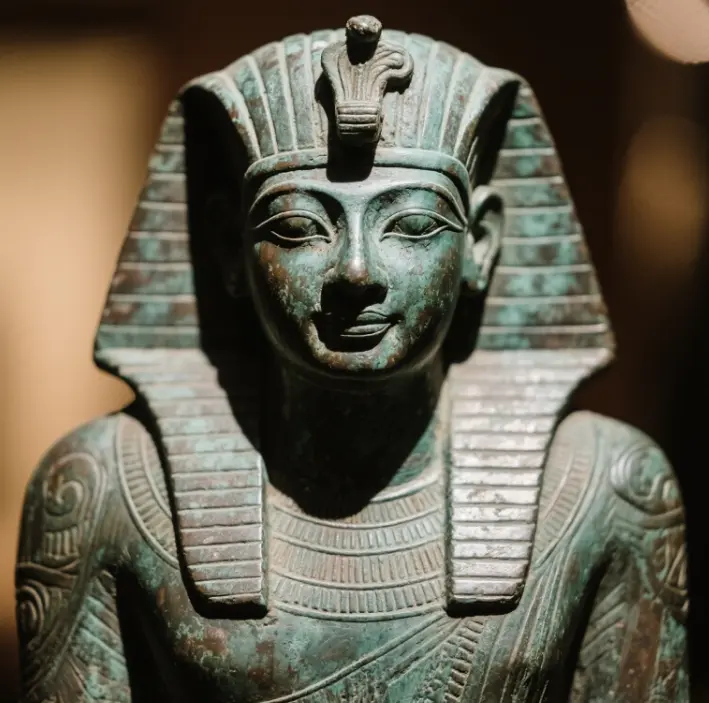
Sculptures are not static pieces of stone or metal, but frozen histories, beliefs and aesthetics. When we give them meticulous restoration and Conservation, we are actually renewing the chapter of our own cultural identity. Conservation of today’s sculpture, it is for tomorrow’s mankind to leave a touchable, sensible, thinkable coordinates of civilization, the following we detail the method of sculpture restoration and Conservation.
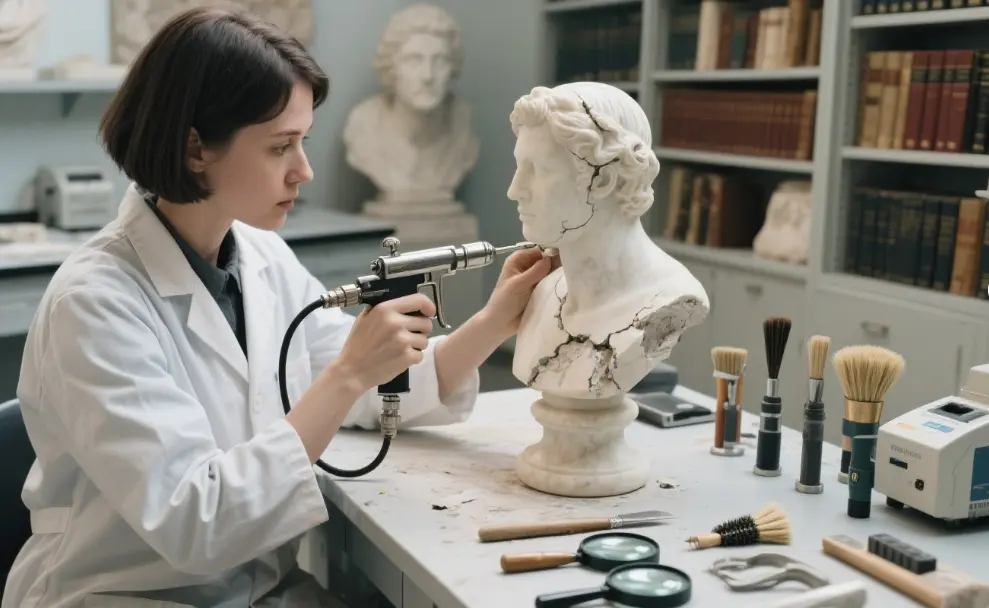
Understanding Sculpture Restoration
What is Sculpture Restoration?
Sculpture restoration refers to the process of intervening in damaged, aged or mutilated sculptures through scientific, technological and artistic means in order to restore their original historical appearance, artistic value or structural stability. It is not a simple “repair”, but on the basis of respecting the sculpture’s original material, craftsmanship and historical context, it enables the sculpture to re-present its cultural significance through techniques such as cleaning, reinforcing, patching and restoring. The core principles of restoration include “minimal intervention,” “reversibility,” and “recognizability”-that is, restoration measures need to minimize changes to the original remains, the materials and methods used should be easily adaptable in the future, and the restored portion needs to be distinguishable from the original portion to avoid misleading the perception of history.
Why is Sculpture Restoration Important?
Sculpture is both a historical archive and a “physical text” of three-dimensional art. When they are mutilated by weathering and erosion, mechanical impact, or vandalism, the original semantics of the artist’s modeling and the traces of his craftsmanship are in danger of being distorted or even extinguished. Timely restoration can stop the loss of information: not only does it allow the viewer to appreciate the shape and spirit of the complete work of art, but it also preserves first-hand samples for material science and art history research. In the case of public monuments, restoration is also a process of emotional dialog with the public – when a familiar statue returns to the square, people’s sense of urban identity is strengthened. This is why sculpture restoration is seen as an important part of sustainable cultural development, rather than a mere “hole-fixing” artisanal activity.
What Techniques are Used in Sculpture Restoration?
The restoration solution has to be precisely matched to the material and the damage mechanism: on stone statues, soot is removed by micro-abrasive sanding or laser stripping, followed by the injection of nanosilica consolidant to reinforce the granular structure; on metal sculptures, the missing parts are recast using the lost-wax method, followed by electrochemical passivation to inhibit corrosion by chlorine ions; and on painted wood sculptures, reversible acrylics are applied to restore the delamination and micropoints are used to replace the missing color. For painted wood sculptures, reversible acrylic resin is used to reapply the delamination and microdotting is used to fill in the missing colors. The entire process emphasizes the principles of “minimal intervention, reversibility, and identifiability”: any new material must be low-toxic, durable, and removable in the future, so as to avoid secondary damage to the original material and sculptural techniques.
Who Performs Sculpture Restoration?
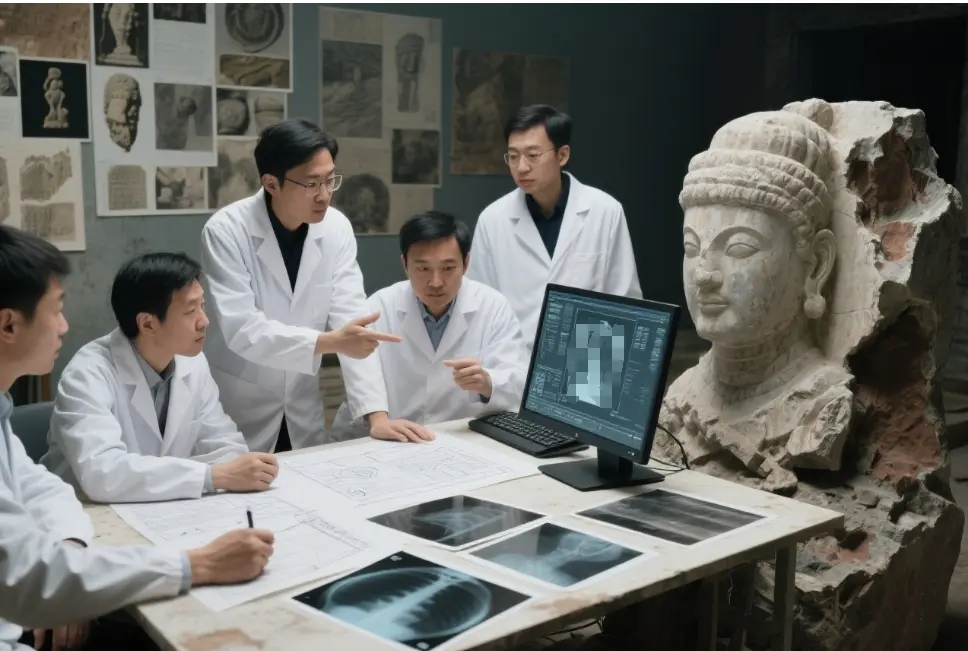
High-level restorations are often carried out by interdisciplinary teams: conservators-restorers who operate and monitor the process; art historians who provide stylistic dating to ensure that the form of the restoration is appropriate to the context of the period; chemical and material specialists who read pigment and mineral compositions through spectroscopic techniques such as XRF and FTIR; and digital engineers who use 3D scanning and modeling to create accurate replacements. The teamwork ensures that the restoration is both scientific and respectful of the creator’s original intent, as some countries require conservator-restorers to be certified, such as INP in France and Opificio delle Pietre Dure in Italy.
The Role of Conservation in Sculpture
What is the Difference Between Restoration and Conservation?
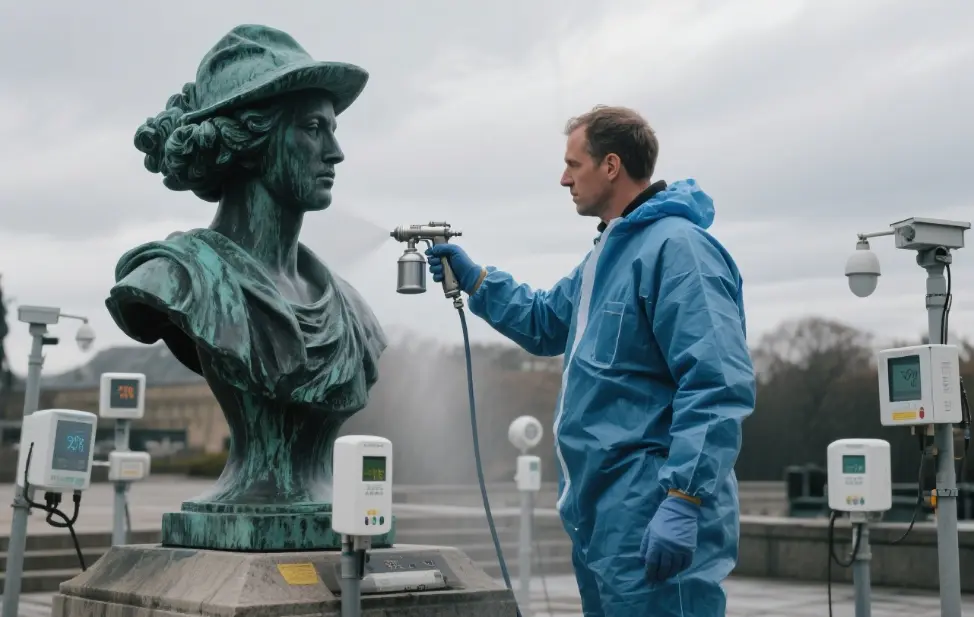
Simply put, restoration is “treatment” and Conservation is “prevention”. The former is a surgical intervention for structural breaks, color layer peeling or metal corrosion that has already occurred; the latter is to slow down damage through environmental regulation, routine maintenance and public management. Without prospective Conservation measures, even the most exquisite restoration will be abandoned in the next rainy season; on the contrary, scientific Conservation can significantly reduce the frequency and cost of future restoration, so that the sculpture to a healthier state across time.
Why is Conservation Critical for Sculptures?
Sculptures are often made from a combination of various materials such as stone, bronze, and wood, each of which is extremely sensitive to humidity, temperature, and pollutants. Acid rain converts calcium carbonate in marble to soluble salts; chloride ions trigger “bronze disease,” a destructive powder corrosion; and microorganisms nest in wood fibers and produce acidic secretions. The systematic Conservation
strategy – constant temperature and humidity, a waterproof wax layer on the surface, and limitations on visitors’ touch – is equivalent to putting a “protective suit” on the sculpture, gaining a valuable window of time for subsequent restoration.
What Methods are Employed in Sculpture Conservation?
Indoor collections are maintained at 18-22°C, 55% RH, and low UV LED lighting through smart HVAC, while outdoors, bronze statues are often sprayed with microcrystalline wax, which is regularly renewed to form a hydrophobic film. At the monitoring level, a growing number of projects are installing wireless sensor networks to collect real-time data on stress, pH, and chloride concentrations, and using AI to predict potential risks. Management systems are also key: limiting the movement of visitors, preventing locomotive vibration during construction, and establishing a red line for cultural artifacts to be touched are all part of building an ecosystem of “proactive conservation”.
Challenges in Sculpture Restoration and Conservation
What Are Common Challenges Faced by Conservators?
The biggest challenge is multifactorial coupling: an outdoor marble statue often suffers from acid rain erosion, freeze-thaw fissures and microbial erosion at the same time, and it is difficult for a single-point solution to take into account all the mechanisms. Secondly, the compatibility of the restoration material with the original material is often a headache – epoxy resins, although strong, may block the stone’s respiration and induce salt precipitation. Finally, there is the cost: precision CT, laser cleaning and 3D printed replacements are expensive, and many valuable sculptures in developing countries have been left to operate for long periods of time.
How Do Environmental Factors Affect Sculptures?
Climate and pollution are like invisible carving knives, carving the surface of the sculpture day and night. The high concentration of chlorine salts in the air of coastal cities makes bronze statues susceptible to light green spots; the huge difference in temperature between day and night in desert areas makes stone sculptures flake and peel off in the cycle of thermal expansion and contraction. The low-frequency vibration generated by the construction of urban subway will make the ancient ceramic plastic internal micro-cracks continue to expand, and eventually broken. These external forces are not one-time disasters, but they do subtly alter the structural integrity of the three-dimensional work of art year after year.
What Ethical Dilemmas Arise in Sculpture Restoration?
The restorers had to weigh “completeness” against “authenticity”: should the broken arm of Venus be replaced to appeal to public aesthetics, or should it be preserved as a reminder of history? The use of modern polymer resins may be strong, but if they are difficult to remove after 100 years, they violate the principle of “reversibility”. Similarly, over-cleaning can cause ancient bronzes to lose the oxidized layer that carries the sense of age; and too much repainting can disguise the restorer’s handwriting as that of the original author. Every choice involves artistic ethics and academic honesty.
The Process of Sculpture Restoration and Conservation
What Are the Steps Involved in the Restoration Process?
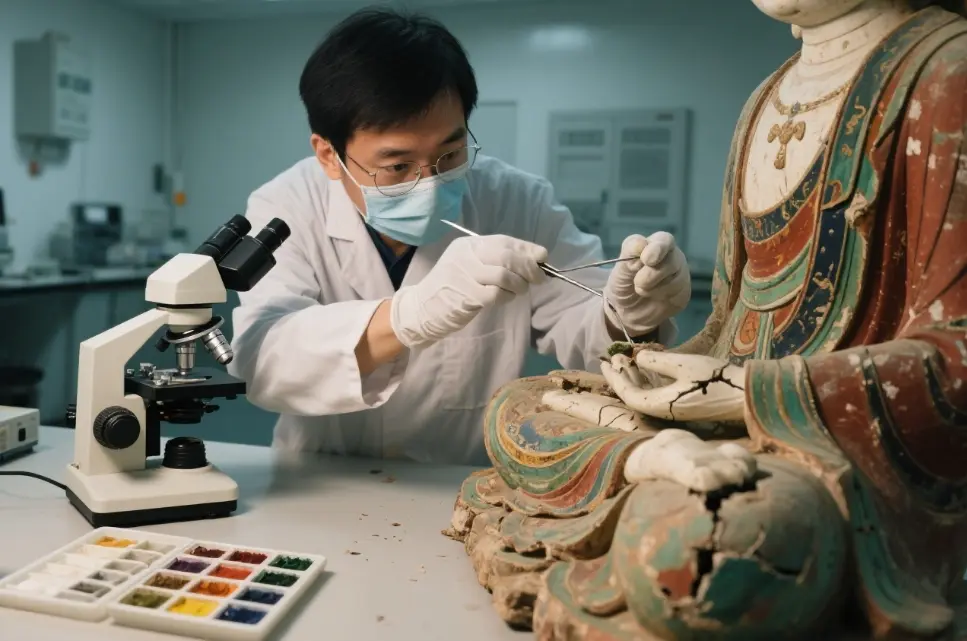
The standard process is divided into five steps: ① comprehensive mapping records, including high-resolution photography, 3D point cloud, disease mapping; ② material and pathological analysis, using XRF, SEM to confirm the type of minerals and corrosion; ③ program design, put forward a number of methods of sculpture intervention paths and expert review; ④ implementation stage, first structural reinforcement, then surface cleaning and replenishment, and finally do the reversible protective layer; ⑤Project acceptance and follow-up monitoring, set up data baseline to ensure the closed loop of “after repair and maintenance”.
How is Assessment Conducted Before Restoration?
The assessment is divided into three dimensions: value, risk and technical feasibility. On the value level, the uniqueness of the sculpture, its symbolic significance and research potential should be considered; on the risk level, the potential impact of chemical solvents on the pigments and the secondary damage of mechanical vibration on the fragile nodes should be predicted; and on the technical level, whether the equipment and human resources can meet the target accuracy should be evaluated. Only after the comprehensive assessment is passed can the restoration project be launched, avoiding the waste of resources “for the sake of repair”.
What Role Does Documentation Play in the Process?
Detailed documentation makes every intervention “traceable”. Every piece of data, from recipe ratios and tool types to temperature and humidity at the site, will be useful for later review, teaching or forensic evaluation. The digital archive can also be shared in the cloud, enabling multinational researchers to compare big data on similar diseases and develop more generalized tips and techniques, making documentation the second life of restoration.
Case Studies in Sculpture Restoration and Conservation
What Are Some Notable Examples of Successful Restoration?
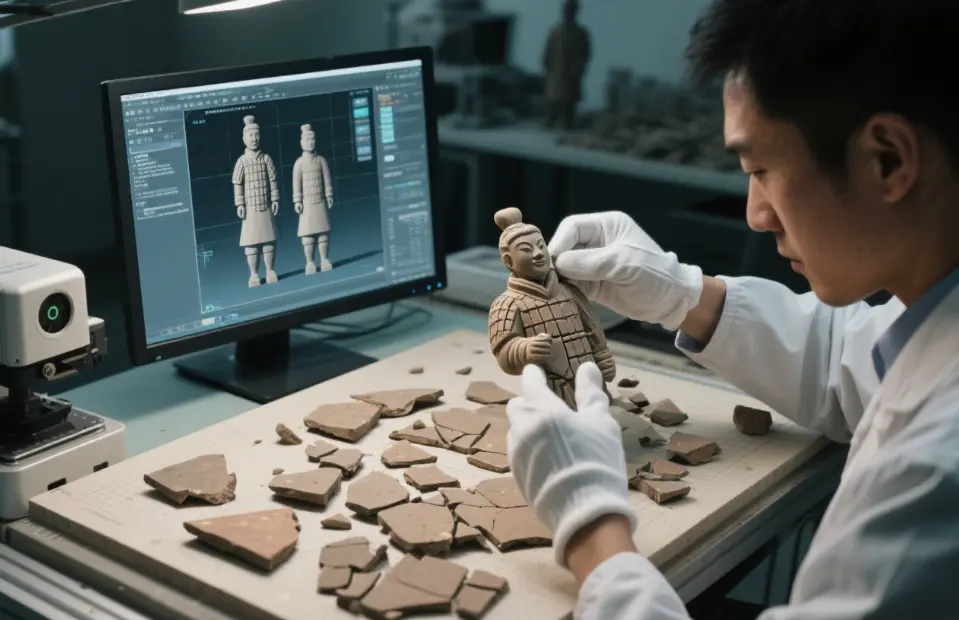
The multidisciplinary joint restoration of the Terracotta Warriors and Horses of Qin puts the fragments of more than 2,000 years old terracotta warriors back into the square; the laser cleaning of the statue of David demonstrates the cutting-edge science and technology of “no chemical residue”; and the Louvre’s digital hierarchical analysis of the “Goddess of Triumph of Samothrace” lets the audience see the original and the traces of restoration in the augmented reality, which is called a new paradigm of “presenting both reality and reality together”. The Louvre’s digital layered analysis of the Samothrace Victory allows the audience to see both the original work and the restoration traces in augmented reality, which is a new paradigm of “real and imaginary”. Together, these projects show that technology and aesthetics are not opposites, but complementary.
What Lessons Have Been Learned from Failed Restorations?
Instead of saving the artifacts, wrong restorations can extend or even perpetuate the damage, as illustrated by the “Ecce Homo” fresco restoration fiasco in the church of Borja, Spain, in 2012, where a well-intentioned local attempted to repair the frescoes but, due to a lack of professional training, changed the face of Jesus into a comical cartoon image. A well-meaning local attempted to repair the fresco, but due to lack of professional training, turned the face of Jesus into a comical cartoon. The “Monkey Jesus” incident attracted media attention, but the damage to the original was irreversible. Other grottoes that were filled with cement in previous restorations suffered severe salinization and cracking after a few years, and eventually had to be treated twice, which was even more costly. These lessons emphasize two principles: first, any restoration must be carried out after adequate testing, never skipping the verification of material compatibility; second, the act of restoration should always be carried out by a qualified professional team, and it is not appropriate to give even the smallest fillings to non-professionals to “give it a try”.
How Have Innovations Impacted Recent Conservation Efforts?
Emerging technologies are quietly changing the way sculptures are protected. Many cultural and museum institutions have begun to use “digital twin” technology to build virtual models of sculptures in the cloud and simulate stress distribution, temperature and humidity fluctuations and other environmental factors on them to assess structural risks in advance. For example, before relocating major cultural relics, the impact of the transportation process on the structure can be tested in the digital environment to avoid unexpected situations during the real operation. Nanogel cleaners are also becoming a popular choice, which can penetrate deep into tiny fissures to attract dust without damaging the pigments on the surface of ancient pottery or porcelain. More cutting-edge applications include AI systems that analyze monitoring data to determine potential aging trends in advance by identifying patterns in air humidity, gaseous corrosives, and temperature variations, and suggesting appropriate preventive measures. These tools are not replacing restorers, but rather becoming an effective reference in their decision-making process, helping to shift conservation from empirical judgment to data support.
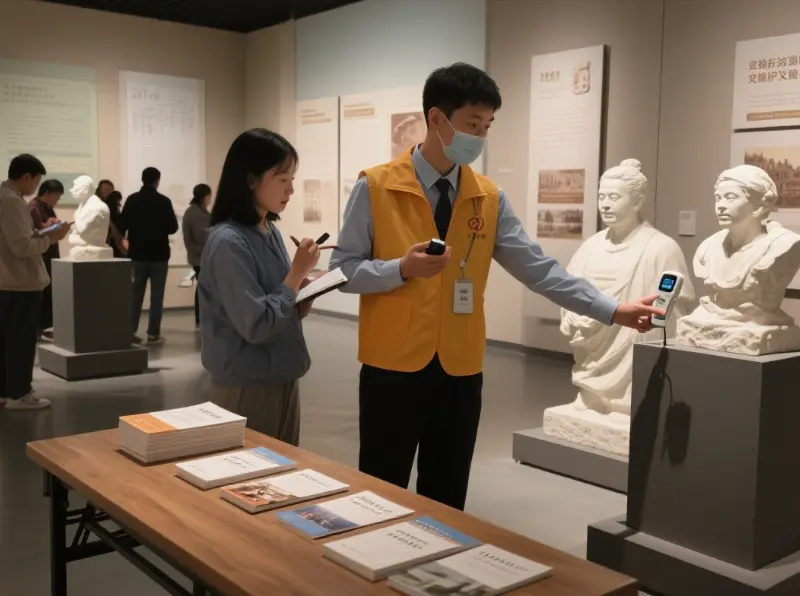
Getting Involved in Sculpture Restoration and Conservation
What Can Art Enthusiasts Do to Support Conservation Efforts?
The public can start from small things: keeping a distance, not painting graffiti, not climbing when visiting; spreading the knowledge of proper sculpture techniques and conservation on social media, and stopping dangerous behaviors such as “private renovation in the street”; joining the museum’s volunteer program to assist in recording temperature and humidity or organizing the archives, and providing data support to the professional team. to provide data support for the professional team. A few drops of energy can add up to a flood of civilization.
Are There Educational Programs Focused on Sculpture Conservation?
A number of universities and institutions around the world have already offered systematic courses, such as the MA in Conservation at the Courtauld Institute in the United Kingdom, the five-year diploma at the OPD Academy in Florence, Italy, and the Master of Arts in Conservation Technology at the Forbidden City Institute in China. The courses cover material chemistry, structural mechanics, digital mapping and ethical regulations, providing multidimensional training for future restorers.
How Can One Become a Sculpture Conservator?
The path is divided into three steps: (1) undergraduate studies in conservation, chemistry or art history to solidify the theory; (2) internships in museums or studios to become proficient in sculpting materials and tools; and (3) national or international certifications, such as the E.C.C.O. (European Certified Restorer) qualification. After obtaining the license, you will need to continue to study and keep up with new materials and techniques in order to gain a foothold in the industry.
What Are the Future Trends in Sculpture Restoration and Conservation?
With the further integration of material science, data technology and public participation, sculpture Conservation will move towards a new phase of “prevention-oriented, digital monitoring and global collaboration”. Technologies such as self-healing coatings, AI intelligent diagnosis and remote robotic cleaning are no longer science fiction, but are being accelerated and incubated in laboratories. In the future, conservation work will be smarter and greener, and rely more on the collaboration of interdisciplinary communities and sustained public attention.